


As we continue our exploration of common mistakes in Hajj, let’s turn our attention to Rami al-Jamarat, the stoning ritual. We have already explored the common mistakes during Hajj while in the Ihram stage when performing Tawaf and Sa’i, and observing the rituals in Mina, Arafat, and Muzdalifah in our first and second episodes.
It’s important to understand these errors and know how to prevent them during our rites of Hajj to fulfill this sacred obligation and receive a great reward from Allah. This rite is an essential part of Hajj and it’s important to perform it correctly. However, many pilgrims make avoidable errors during this significant act of Hajj.
Stay tuned in this concluding part of the series to complete your preparation for a successful Hajj. May Allah guide and bless your pilgrimage.
Common Mistakes in Hajj when stoning the Jamarat
1. Believing That Stones Collected Outside Muzdalifah Are Invalid
Some pilgrims believe that the stones they will use must be collected from Muzdalifah, and any other stones from elsewhere are invalid. Meanwhile, there is no specific requirement in the Sunnah that the pebbles must be collected from Muzdalifah:
Although the most common act is to collect the stones from Muzdalifah, it is also permissible to collect them from any other place.
2. Washing or Cleaning the Pebbles
Some pilgrims believe that they must wash or clean the pebbles before using them for stoning. They believe others might have urinated on them and it’s necessary to wash them. No, this is an error. There is no instruction from the Prophet (peace and blessings be upon him) regarding washing the pebbles. Use them as they are, and only focus on the act of worship rather than unnecessary details.
3. Using Large Stones
Many pilgrims mistakenly use large stones instead of the small pebbles prescribed by our Prophet for stoning. Ensure you use small pebbles, about the size of a chickpea, as instructed by the Prophet (peace and blessings be upon him). This prevents injury to others and aligns with the Sunnah.
The Prophet Muhammad (peace and blessings be upon him) said:
Narrated Sulaiman b. ‘Amr b. al-Ahwas
On the authority of his mother: I saw the Messenger of Allah (peace and blessings be upon him) throwing pebbles at the jamrah from the botton of wadi (valley) while he was riding (on a camel). He was uttering the takbir (Allah is most great) with each pebble. A man behind him was shading him. I asked about the man. They (the people) said: He is al-Fadl b. al-‘Abbas. The people crowded. The Prophet (peace and blessings be upon him) said: ‘O people, do not kill each other ; when you throw pebbled at the jamrah, throw small pebbles. (Sunan Abi Dawud, 1966)
4. Missing the Jamarat Pillars and the Pit Around Jamarat
Some pilgrims, due to crowds and haste, and particularly those unfamiliar with the ritual, might stone the wrong pillars or do so in the incorrect order. The greatest mistake of some pilgrims is throwing the pebbles without ensuring they land in the designated pit around the Jamarat pillars, nullifying the act of stoning. One must ensure that the pebbles landed in the designated pit area and it doesn’t matter if they come out again.
The Prophet Muhammad (peace and blessings be upon him) ensured his pebbles hit the target:
It was narrated that Az-Zuhri said:
“We heard that when the Messenger of Allah stoned the Jamrah he stoned it with seven pebbles, saying the Takbir every time he threw a pebble. Then he came in front of it and stood facing the Qiblah, raising his hands and supplicating fro a long time. Then he came to the second Jamrah and stoned it stoned it with seven pebbles, saying the Takbir every time he threw a pebble.
Then he moved to the left and stood facing the Qiblah, raising his hands and supplicating for a long time. Then he came to the Jamrat that is at al ‘Aqabah and stoned ti with seven pebbles, but he did not stand there.” Az-Zuhri said: “I heard Salim narrted this from his father, from the Prophetk and Ibn’Umar used to do that.” ” (Sunan an-Nasa’i, 3083)
5. Thinking They Are Stoning the Devil
Some pilgrims believe that they are physically stoning the devil himself, which leads to intense and sometimes aggressive behavior while stoning. This is a false statement and belief. Understand that the act is just part of the necessary rite, but you are not actually stoning the devil. Therefore, maintain a calm conduct and perform the ritual with the right intention.
6. Not Saying Takbeer with Each Pebble
Some pilgrims forget to say “Takbeer” while throwing the pebbles, which is part of the ritual as performed by Prophet Muhammad (peace and blessings be upon him).
It was narrated that Az-Zuhri said:
“We heard that when the Messenger of Allah stoned the Jamrah he stoned it with seven pebbles, saying the Takbir every time he threw a pebble. Then he came in front of it and stood facing the Qiblah, raising his hands and supplicating fro a long time. Then he came to the second Jamrah and stoned it stoned it with seven pebbles, saying the Takbir every time he threw a pebble. (Sunan an-Nasa’i, 3083)
Mistake when slaughtering animals for Udhiyah (Qurbani)
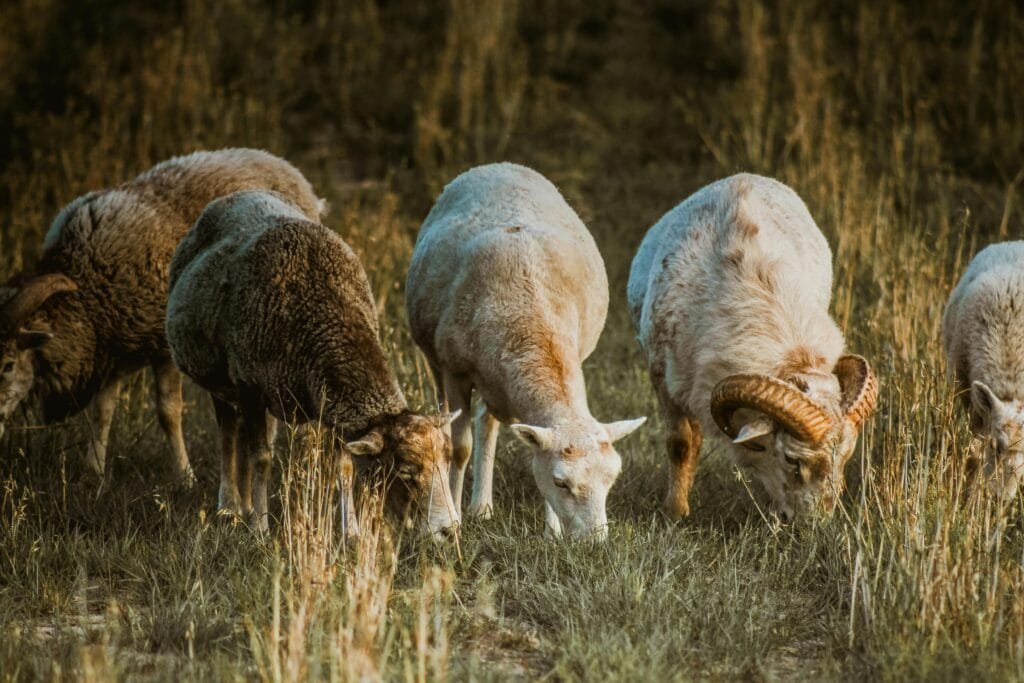
1. Choosing an Inappropriate Animal
One common mistake is selecting an animal that does not meet Islamic requirements. The sacrificed animal should be one of the following: a sheep, goat, cow, or camel. Each type has specific age requirements: a sheep or goat must be at least one year old, a cow at least two years old, and a camel at least five years old.
“And for every nation We have appointed religious ceremonies, that they may mention the name of Allah over the beast of cattle that He has given them for food…” (Quran 22:34).
The animal must also be healthy and free from any physical defects such as blindness, lameness, or severe illness.
I heard ‘Ubaid bin Fairuz say: ‘I said to Bara’ bin ‘Azib: “Tell us of the sacrificial animals that the Messenger of Allah (peace and blessings be upon him) disliked or forbade.” He said: “Allah’s Messenger (peace and blessings be upon him) said like this with his hand. And my hand is shorter than his hand:* ‘
There are four that will not be accepted as sacrifices: The one-eyed animal that is obviously blind in one eye; the sick animal that is obviously sick; the lame animal with an obvious limp; and the animal that is so emaciated that it is as if there is no marrow in its bones.’” He said:** “And I dislike that the animal should have some fault in its ears.” He said: “What you dislike, forget about it and do not make it forbidden to anyone.” (Sunan Ibn Majah, 3144)
Pilgrims must ensure that the animal chosen for sacrifice meets the Islamic criteria: it should be healthy and of the required age (for sheep/goat, at least one year old; for cattle at least two years old and for camel at least five years old), and free from any defects.
You can also verify the animal’s health and age from a knowledgeable person about animals or local authority before making a purchase.
2. Improper timing of the Sacrifice
It’s a mistake to kill the animal before Eid prayer. The sacrifice should be performed after the Eid prayer on the 10th day of Dhul-Hijjah and can continue until sunset on the 13th of Dhul-Hijjah. It is obligatory to mention the name of Allah upon slaughtering the animal too.
Jundab b. Sufyan reported:
I was with Allah’s Messenger (peace and blessings be upon him) on the day of ‘Id al-Adha. While he had not returned after having offered (the Id prayer) and finished it, he saw the flesh of the sacrificial animals which had been slaughtered before he had completed the prayer.Thereupon he (the Prophet) said: One who slaughtered his sacrificial animal before his prayer or our prayer (before Eid), he should slaughter another one in instead (because it’s invalid to slaughter before the Eid prayer), and he who did not slaughter, he should slaughter by reciting the name of Allah (when he’s ready to slaughter). (Sahih Muslim, 1960 a)
3. Bad intention is one of the common mistakes in Hajj to avoid
The person performing this sacrifice must have a clear and sincere intention (Niyyah) to do it so solely for the sake of Allah and not for people to see that he has money to buy a ram or cow.
Allah says: Their meat will not reach Allah, nor will their blood, but what reaches Him is piety from you.” (Quran 22:37)
The Prophet Muhammad said, “Actions are but by intentions, and every man shall have only what he intended.” (Sahih al-Bukhari and Sahih Muslim)
4. Improper Slaughtering Method
The animal must be slaughtered by a Muslim who will also utter the name of Allah (Bismillah, Allahu Akbar) at the time of slaughter. The animal should be killed with a sharp knife to minimize the animal’s suffering, and the blood must be fully drained.
Thereupon he (the Prophet) said:.. he should slaughter by reciting the name of Allah (when he’s ready to slaughter). (Sahih Muslim, 1960 a)
The Prophet Muhammad also said: Verily Allah has prescribed ihsan (proficiency, perfection) in all things. So if you kill then kill well; and if you slaughter, then slaughter well. Let each one of you sharpen his blade and let him spare suffering to the animal he slaughters.” [Sahih Muslim]
Mistakes in Hajj When Shaving the Head or Cutting the Hair
1. Not Shaving or Cutting Sufficient Hair
One common mistake in Hajj is that you will see some pilgrims cutting only a few strands of hair, believing this suffices. However, for men, it is preferred to shave the entire head, while shortening the hair to a significant portion is also acceptable. Women should also do the same.
Another common mistake in Hajj is shaving half of the head and leaving the rest, or just snipping a few strands of hair. This is a great mistake that should be avoided.
The Prophet (peace and blessings be upon him) said:
May Allah have mercy on those who shave (their heads).” They said: “And those who cut (their hair), O Messenger of Allah!” He said: “May Allah have mercy on those who shave (their heads).” They said: “And those who cut (their hair), O Messenger of Allah!” He said: “May Allah have mercy on those who shave (their heads).” They said: “And those who cut (their hair), O Messenger of Allah!” He said: “And those who cut (their hair).” (Sunan Ibn Majah, 3044)
2. Shaving or Cutting Hair Before Permissible Time
Some pilgrims delay shaving or cutting their hair beyond the prescribed time, which is supposed to be done immediately after the sacrifice, while some pilgrims shave or cut their hair before completing all the necessary rites, such as the stoning of the Jamarat. This invalidates the act and requires it to be redone.
The Prophet (peace and blessings be upon him) said:
Whoever among you does not have a sacrificial animal with him, let him exit Ihram and make it ‘Umrah.” So all the people exited Ihram and cut their hair, except the Prophet (peace and blessings be upon him) and those who had sacrificial animals with them. (Sunan Ibn Majah, 3074)
Shaving or cutting the hair should be done promptly after the sacrifice to maintain the proper order of rituals last recommended by Prophet Muhammad (peace and blessings be upon him)
Mistakes in Farewell Tawaf (Tawaf al-Wada‘)
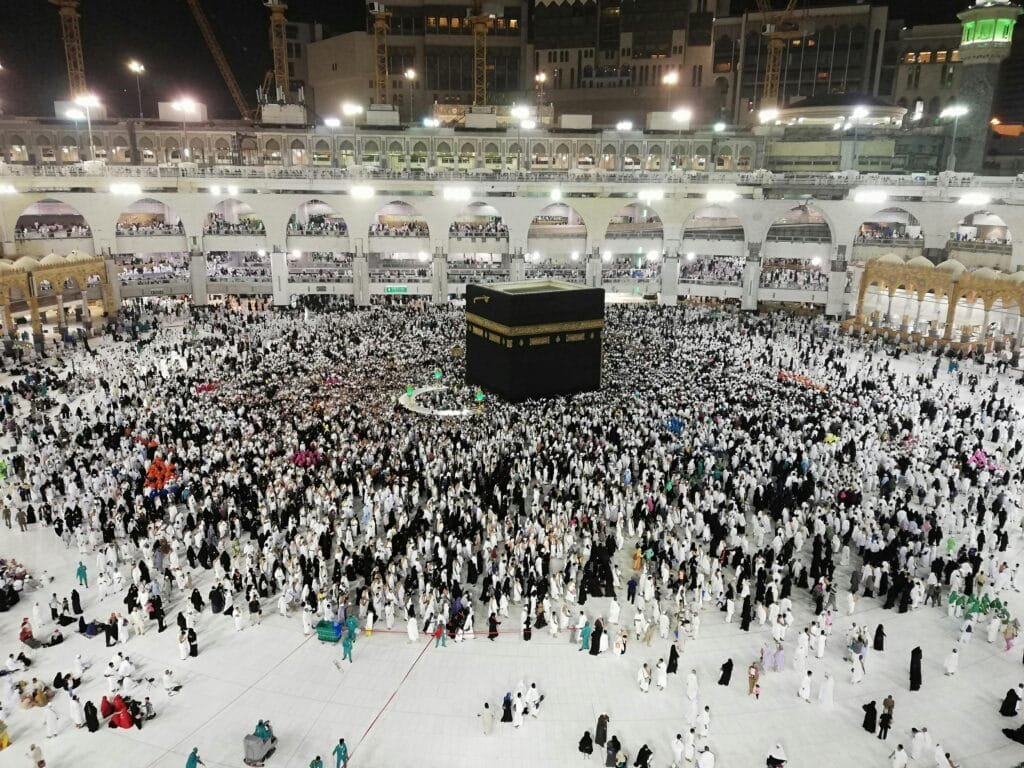
The most common mistake in hajj occurs during Tawaf al-Wada‘. This is a farewell (last) circumambulation of the Kaaba that is obligatory for all pilgrims before leaving Mecca except menstruating women. By neglecting this ritual, pilgrims miss an essential act of worship that completes their Hajj.
All the conditions of Tawaf must be followed, as we have discussed in depth about it in our previous episode of the Top Mistakes To Avoid During Hajj. Other mistakes that should be avoided include the following:
1. Not Performing Tawaf al-Wada‘
One of the major mistakes is skipping the farewell tawaf altogether. Some pilgrims mistakenly believe that it is not mandatory, or they simply forget due to their fatigue and busy schedules. It is the last ritual of Hajj that must be performed to complete the whole ritual.
Ibn ‘Abbas (Allah be pleased with them) reported that the people used to return through every path, whereupon Allah’s Messenger (peace and blessings be upon him) said:
None amongst you should depart until he performs the last circumambulation around the House (Sahih Muslim, 1327) (exceptions were made for menstruating women and can leave)
“The people were ordered to make the last of their acts (of Hajj) at the House, but an exception was made for the menstruating women.”
(Sahih Bukhari)
2. Walking Backward Facing the Kaaba When Leaving
Some pilgrims believe that they must walk in a backward way while facing the Kaaba when leaving the Haram, thinking this shows respect to the Kaaba. This practice is not established in the Sunnah and can lead to another sin. Simply turn and walk out of the mosque normally, while keeping the respect and regard for the sacred place in your heart.
3. Reciting Specific Farewell Prayers or Making Salam at the Door of the Kaaba
Some pilgrims stop at the door of the Kaaba to recite special farewell prayers or to make Salam (greetings) at the door of the Kaaba. This practice is not established in the Sunnah and should not be done as it is bid’ah (innovation)
There is no specific commandment from the Quran or Sunnah to stop at the door of the Kaaba for additional farewell prayers.
Don’t forget that all the conditions of Tawaf must be observed as we have discussed in depth about it here “Top Mistakes To Avoid During Hajj”.
The above are other common mistakes that should be avoided during the farewell Tawaf. Don’t forget to read the first and second episodes to have a full understanding of the mistakes in Hajj to avoid and take note of.
Conclusion on the common mistakes in Hajj
Dear brothers and sisters, performing Tawaf al-Wada‘ correctly is an integral part of concluding your Hajj. Don’t forget to read the first and second episodes of this article, which are basically about understanding the common mistakes in Hajj that should be avoided.
Avoiding these common mistakes ensures that this act of worship (rituals of Hajj) is completed in a manner that is pleasing to Allah (Subhanahu was ta’ala). By adhering to the correct practices from the Quran and the Sunnah of Prophet Muhammad (peace and blessings be upon him), we’ll be able to perform a pilgrimage with a heart of great spiritual fulfillment and be a well-rewarding one.
May Allah (Subhanahu was ta’ala) accept our Hajj and grant us the ability to perform all acts of worship with sincerity and devotion. Aameen.
