


My dear brothers and sisters, knowing the rights and duties between spouses in Islam is highly recommended for us because when we speak about marriage in Islam, we are speaking about an act of worship. We are speaking about a sacred trust. We are speaking about one of the greatest signs of Allah on this earth. Allah says in the Qur’an:
“And among His signs is that He created for you from yourselves mates that you may find tranquility in them; and He placed between you affection and mercy.” (Surah Ar-Rum 30:21)
Look closely at this verse. Allah mentions three specific gifts, Sakinah—tranquillity, Mawaddah—love, Rahmah—mercy and compassion that He places in marriage, and each one has its own purpose. That means the rights and duties between spouses in Islam are not man-made rules. They are divine guidance designed by the One who created our hearts.
If you’re searching for the true rights and duties between husband and wife, then understand this first: Islam does not build marriage on dominance. It builds it on sakīnah (tranquillity), mawaddah (deep love), and rahmah (mercy).
We should know very well that marriage as a Divine Covenant as Allah describes marriage in Surah An-Nisā’ as:
“And they have taken from you a solemn covenant (mīthāqan ghalīdhā).” (Surah An-Nisa 4:21)
That means when a man stands before Allah and takes a woman as his wife, he is not just making promises to her. He is making a covenant with Allah. Marriage is from the greatest of trusts (amanah), and betrayal within it is not just social wrongdoing but a disobedience to Allah. When you get married, you are not just signing a piece of paper. You are entering into a covenant that has spiritual weight, that carries divine significance.
When a man marries a woman, he takes her not by his own power, but by the permission of Allah and according to His law. And because it is a covenant with Allah, it must be honoured as such. You cannot treat it like a business deal that you can walk away from whenever it becomes inconvenient. This tells us that the rights and duties between spouses in Islam are not optional courtesies. They are religious obligations.
When a husband understands that his wife has rights over him, and he fulfils them for the sake of Allah, he draws closer to his Lord. When a wife understands her duties and performs them with ihsan, she earns a reward beyond what we can imagine. And together, they build a home that is not just a house, but a piece of Jannah on earth.
Some of the Rights of the Wife from Her Husband
My dear brothers, before you ask about your authority, ask yourself about your accountability. Before you demand respect, ask yourself whether you are fulfilling the rights and duties between spouses in Islam as Allah commanded. Wallahi, many homes collapse not because of poverty, but injustice. And injustice within marriage is darkness on the Day of Judgment. You are not just a husband but a shepherd. And the Prophet ﷺ said:
“Each of you is a shepherd, and each of you will be questioned about his flock.”
So let us speak clearly about some of the rights and duties between husband and wife, beginning with the rights of your wife upon you.
1. The Mahr (Dowry). A Gift, Not a Price
This is not a “bride price” paid to her father; it is a gift from the husband to his wife, a token of his sincere commitment and honour for her. Allah commands us clearly,
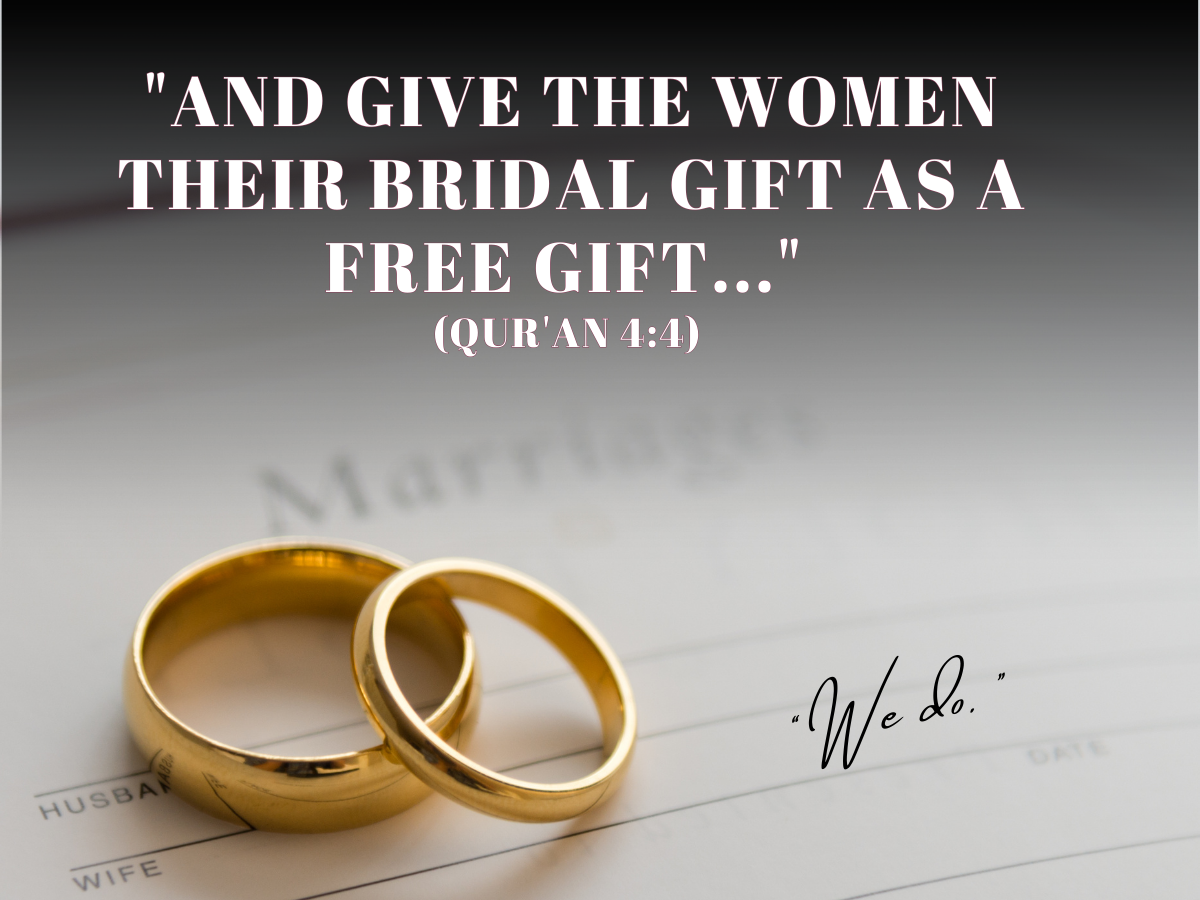
“And give the women their bridal gift as a free gift…” (Qur’an 4:4) .
It is her exclusive right, and she may do with it as she pleases. It is her right, her property, her gift. Giving her the Marhr is among the conditions of a valid marriage in Islam. The marriage contract is not even valid without it. But If your wife, out of the goodness of her heart, chooses to forgive part of it or gift it back to you after she has received it, that is her right. Allah says:
“…but if they, of their own good will, remit any part of it to you, take it, and enjoy it without fear of any harm.”
But note the condition: her own goodwill. Not pressure. Not manipulation. Not “if you love me, you’ll give it back.”
2. Financial Maintenance (Nafaqah)
Allah says:
“Men are the protectors and maintainers of women, because Allah has given the one more (strength) than the other, and because they support them from their means…” (Surah An-Nisa, 4:34)
This verse is often quoted to emphasise leadership. But my dear brother, leadership in Islam begins with responsibility, not control. The word qawwamoon in this verse means one who stands up to provide, protect, and support. It means you are responsible. The financial burden of the household falls on your shoulders, not hers. This includes..
- Food, whatever is needed to nourish her and the children
- Clothing, not just anything, but what is appropriate and reasonable
- Shelter, a home where she feels safe and secure
- Medical care, attending to her health needs
- Necessary living expenses
And here is something beautiful, brothers. Even if your wife is wealthy, even if she has more money than you, that does not absolve you of your duty. Her wealth is hers. Providing is not a favour you give her. It is a duty Allah placed upon you. And providing does not mean luxury. It means according to your means, with sincerity and dignity. The Prophet ﷺ said:
“It is sufficient sin for a man that he neglects those whom he is responsible to maintain.” (Muslim 996)
My brother, if you can spend on friends, gadgets, and outings but hesitate when it comes to your household, then revisit your priorities. Financial responsibility is one of the core rights and duties between spouses in Islam, and it is the foundation of trust. As you are doing this, you get rewarded based on what our Prophet ﷺ said:
And whatever you spend for Allah’s Sake, you will get reward for it even for the morsel of food which you put in your wives mouth.(Bukhari, 4409)
3. Kind and Gentle Treatment (Mu‘āsharah bil Ma‘rūf)
This is where the soul of marriage lives. Allah commands:
“And live with them in kindness…” (Surah An-Nisa, 4:19)
Not just live with them, but live with them with what is good, acceptable, kind, and honourable. This verse alone should humble every husband. Our Prophet, alayhi salatu wa sallam, modelled this perfectly. Look at his example. Aisha, radhiAllahu anha, described how he would talk with her, how he would race with her, how he would show affection even in small daily moments.
When the Abyssinians were playing in the mosque, he covered her with his cloak so she could watch, and stood there patiently until she had enough. This is the Prophet! The leader of humanity stood for his wife so she could enjoy herself. And he said:
“The best of you are those who are the best to their wives, and I am the best of you to my wives.” Sunan al-Tirmidhī 3895
So the measure of your goodness as a Muslim is directly connected to how you treat your wife. Kind treatment includes:
- Speaking gently, not harshly
- Smiling at her
- Forgiving her mistakes
- Consulting her in matters
- Showing appreciation for what she does
The Prophet said,
“A believing man should not hate a believing woman. If he dislikes something in her character, he should be pleased with some other trait of hers.” Muslim 1469
This is wisdom, brothers. No human being is perfect. If you focus on what annoys you, you will miss all the good she brings. Marriage is not a courtroom. It is a companionship. Good companionship includes patience with her emotional nature and overlooking minor faults.
4. The Right to Intimacy
And let us speak frankly, as men. Your wife has a right to have her physical and intimate needs fulfilled in a loving, gentle manner. This is not just about your desire, it is about mutual care. She needs it like you and has to be attended to. The Prophet, sallallahu alayhi wa sallam, told Jabir when he married a previously married woman:
“Why didn’t you marry a virgin so that you could play with her and she could play with you, and you make her laugh and she makes you laugh?” Muslim 715e
Notice the language: “play.” Affection. Joy. Laughter. This is what intimacy should be. And the Prophet elevated even this to charity. He said:
“In the intimate act of each one of you there is charity.” The companions asked, “O Messenger of Allah, is there reward for fulfilling our desires?” He replied: “If you were to fulfill them in a haram way, would you not be sinful? Likewise, if you fulfill them in a halal way, you are rewarded.” Hadith 25, An Nawawi
So neglecting your wife’s emotional and physical needs is not just a failing as a husband, it is a loss of reward and a cause for her legitimate complaint.
5. Emotional Support and Respect
My dear brothers, your wife is not just someone who cooks and cleans only. She has a heart. One of the neglected aspects of the rights and duties between husband and wife today is emotional care. Listening to her, appreciating and speaking gently to her. Brothers, your wife needs to feel seen, heard, and valued. The Prophet’s companion asked him:
O Messenger of Allah, what is the right of the wife of any of us over him? He said: “To feed her when you eat, clothe her when you clothe yourself, or when you earn money, do not strike on the face, do not revile, and do not forsake except inside the house (bed to discipline if she errs and doesnt listen) [Hasan] – [Narrated by Abu Dāwūd, Ibn Mājah, and Ahmad]
Do not malign her, meaning do not insult her, do not use hurtful words, do not curse her or her family. And do not strike her face, symbolic of avoiding any degrading treatment. You should avoid…
- Mocking her opinions
- Comparing her to other women
- Publicly criticizing her
- Using sarcasm that humiliates
Respect her intelligence. Respect her sacrifices. Appreciation goes a long way. When she cooks, thank her. When she takes care of the children, acknowledge it. When she asks about your day, open up and share with her. And ask about hers. The Prophet would talk with Aisha, share with her, and listen to her. Remember that tranquillity (sakīnah) grows where appreciation exists.
6. Fairness in Polygamy (If Applicable)
Now, brothers, this is a sensitive topic, but we must address it with honesty. Allah says:
“But if you fear that you will not be just, then [marry only] one…” (Surah An-Nisa, 4:3)
And then He says in another verse:
“And you will never be able to be equal [in feeling] between wives, even if you should strive [to do so]…” (Surah An-Nisa, 4:129)
The scholars have explained that the justice required in polygamy is in the tangible matters like spending, nights, and accommodation, not in the feelings of the heart, which are beyond human control. Polygamy is not a playground for desires. It is a responsibility that requires taqwa. But here is the crucial point: the Prophet, sallallahu alayhi wa sallam, warned severely:
“He who has two wives and does not treat them both equally will appear on the Day of Requital while he is half paralysed.”
This is not a small matter. If you have more than one wife, you must divide your time, your provision, and your attention justly. Any inclination toward one at the expense of the other is a sin that will be questioned. If a man cannot be just, then he should suffice with one wife. This is closer to piety and safer for his accountability before Allah. This, too, falls under the sacred rights and duties between spouses in Islam.
7. Protection of Her Honor and Dignity
Brothers, your wife has entrusted you with her honour. Guard it. Guarding her secrets is upon you. The Prophet, sallallahu alayhi wa sallam, said:
“One of the worst positions in the sight of Allah on the Day of Requital is that of a man who has intimate relations with his wife, and then spreads the secrets of his spouse to others.” Muslim 1437
What happens between you and your wife in the privacy of your home is sacred. The intimate details, the moments of vulnerability, the things she shares with you in confidence, these are not topics for discussion with friends, with family, or with anyone.
Some men, when sitting with their friends, start talking about their wives in ways that dishonour them. This is forbidden. This breaks trust. This is from the worst of manners.
Avoiding public criticism
And here is a practical point: never criticise your wife in public. Never humiliate her in front of others, whether in front of your family, her family, or strangers. If there is an issue, address it privately, with wisdom and gentleness. The Prophet said:
“Do not harm and do not reciprocate harm.” Harming your wife—emotionally, verbally, or physically—is haram. And doing so publicly compounds the harm.
Rights of the Husband in Islam from His Wife
My dear sisters, just as Islam gave you honoured rights, it also placed noble responsibilities upon you. The rights and duties between spouses in Islam are not a one-sided system. They are balanced, divinely structured, and rooted in justice. You are not a servant in your marriage. You are a partner. You are the queen of your home. But every queen has responsibilities tied to her honour.
Let us understand the rights and duties between husband and wife from your side with clarity and wisdom. Just as you desire kindness, mercy, and love, so does he. Just as you have needs, so does he. And when both of you fulfil each other’s rights with sincere hearts, your home becomes a place of barakah.
1. The Right to Obedience in Goodness
First, we must clarify something important. Obedience in Islam is not blind submission. It is not humiliation. It is not slavery. It is obedience within what is good, reasonable, and within the limits of Allah’s law. The Prophet ﷺ said:
“There is no obedience to the creation in disobedience to the Creator.”
If your husband commands something haram like removing hijab, cutting family ties unjustly, abandoning salah, you must not obey him. Your loyalty to Allah comes first. But within what is halal and reasonable, Allah describes the righteous wife as:
“Righteous women are devoutly obedient and guard in the husband’s absence what Allah would have them guard.” (Surah An-Nisa 4:34)
Obedient to whom? Primarily to Allah. And then, flowing from that obedience to Allah, comes obedience to the husband in what is good and right. This obedience refers to cooperation, loyalty, and preserving the marital trust. This includes:
- Guarding his wealth, not spending wastefully, not giving away what is not yours to give without his permission
- Guarding his home, maintaining it, keeping it as a place of peace and comfort
- Guarding his honour, protecting his reputation, not speaking ill of him to others
- Guarding the secrets of their private life, not sharing intimate details with anyone, not even your closest friends or family
My dear sister, obedience here means you protect the stability of your home. You are not losing dignity, but you are preserving unity. This obedience strengthens love when it is given with sincerity, not resentment. It is about harmony, not hierarchy.
2. The Right to Respect and Comfort
Just as you desire softness, he also desires peace. The Prophet ﷺ warned against ingratitude within marriage. He mentioned that among the reasons some women were punished was because they were ungrateful to their husbands, meaning they would ignore years of kindness and say, “I have never seen any good from you.”
My dear sister, appreciation is powerful. If he works hard to provide, acknowledge it. If he tries, even imperfectly, recognize it. Mutual appreciation is one of the greatest causes of lasting love. Your home should be his place of rest, just as you want him to be your comfort. Words can either heal or wound deeply. Choose them wisely.
3. Respect and Cooperation in Leadership (Qiwāmah Explained Properly)
Many misunderstand this. They imagine a husband ordering his wife around like a slave, with her having no voice, no opinion, no say in anything. This is not Islam. This is ignorance, and often, it is cultural oppression dressed in religious clothing. The truth is that Men are the maintainers and protectors of women. Allah says:
“Men are the protectors and maintainers (qawwamun) of women, because Allah has given the one more (strength) than the other, and because they support them from their means…” (Surah An-Nisa, 4:34)
This leadership is tied to financial responsibility and protection. It does not mean oppression or arrogance. My dear sister, cooperating with his leadership does not mean losing your voice. It means working together without constant power struggles.
The husband’s role is one of responsibility, not privilege. He will be asked by Allah on the Day of Judgment about how he led his family. He carries the burden of providing, of protecting, of making the final decisions after consultation. This is a heavyweight, my sisters, not a crown of oppression. But this leadership is built on cooperation, not domination.
The Prophet, sallallahu alayhi wa sallam, consulted his wives. He listened to Umm Salamah’s advice at Hudaybiyyah, and it changed the course of events. He would ask Aisha’s opinion on matters. Leadership in Islam is shura, consultation, not dictatorship.
So when your husband makes a decision after discussing it with you, support him. Even if you initially disagreed, once the decision is made, cooperate. This is not a weakness, it is the way of the righteous women who came before us.
4. Protection of His Home and Honour
My dear sisters, your husband entrusts you with his most precious possessions: his home, his children, and his honour. This trust is sacred. The Prophet, sallallahu alayhi wa sallam, said:
“A woman is the guardian of her husband’s home and is responsible for her flock.” Ṣaḥīḥ al-Bukhārī 7138, Ṣaḥīḥ Muslim 1829
What does this guardianship involve? It means when your husband is at work, striving to provide for the family, you are the one maintaining the peace of the home. You are the one welcoming him back to a place of comfort. You are the one raising the children upon Islamic values.
You are the one ensuring that nothing enters the home that would displease him, whether that is harmful people, forbidden content, or anything else that violates the trust. The Prophet praised the women of the Quraysh, saying:
“…the most compassionate of them to their children during childhood and the most careful of them regarding their husband’s possessions.” Bukhari 5082
Notice the two qualities: compassion toward children and care for the husband’s possessions. These go hand in hand. Guarding his home includes:
- Not allowing people he dislikes into his private space
- Managing household affairs responsibly
- Preserving family privacy
- Avoiding public exposure of marital issues
It alos include protecting a husband’s honor includes refraining from speaking negatively about him to others unnecessarily. Social media has made this even more important today. Do not turn private pain into public content. When someone asks about him, speak of his good qualities. When you are with your family, do not complain about him in ways that lower his status. If there are issues, address them privately, not publicly.
And protecting his honour also means guarding your own honour. When a woman maintains her modesty, her hijab, her dignity, she protects her husband’s reputation as well. People see her and think, “What a righteous woman—her husband must be a good man who encourages her in goodness.”
5. Fulfilment of Marital Intimacy
Let us speak with wisdom and propriety about this important aspect of marriage. Just as you have the right to have your physical and intimate needs fulfilled with love and gentleness, your husband has the same right over you. This is mutual, my sisters. It is not one-sided.
The Prophet, sallallahu alayhi wa sallam, taught that intimacy between spouses is an act of charity for both. When you respond to your husband’s needs with a loving heart, you are not just fulfilling a duty, you are earning a reward, as we have discussed in one of the hadith above. You are strengthening the bond between you. You are protecting him from temptation and guarding both of you from falling into haram.
Allah describes the relationship between spouses as garments. Just as a garment covers, protects, and brings comfort, so should spouses be for one another. This includes physical comfort and intimacy. Denying intimacy without a legitimate shar’i reason—such as illness, extreme fatigue, menstruation, or obligatory fasting is discouraged. The Prophet, sallallahu alayhi wa sallam, said:
If a man invites his wife to his bed and she refuses, and so he spends the night angry with her, the angels will curse her until the morning. [Narrated by Bukhari & Muslim]
This hadith is often misunderstood, my sisters. It is not about a husband’s entitlement to use his wife whenever he wishes, regardless of her condition. It is about the importance of mutual care and the harm caused by rejection without a valid reason. Imagine if you needed your husband’s emotional support, and he turned away from you coldly, how would that feel? The same applies here.
But let me be clear: if you have a legitimate reason, if you are ill, exhausted from caring for children, or any other valid excuse, Islam does not burden you beyond your capacity. The husband who loves his wife will understand and be patient. The Prophet never pressured any of his wives; he was always gentle and considerate.
This is a mutual right. Just as the wife should not deny her husband without reason, the husband should not neglect his wife’s needs either. Both have responsibilities, and both will be questioned.
6. The Right to Respect and Comfort
My dear sisters, your husband carries heavy burdens. He works long hours, faces pressures at work, worries about providing for the family, and bears the weight of responsibility for everyone under his care. When he comes home, he needs a place of peace, not more conflict, not more complaints.
This does not mean you cannot express your needs. Of course you can, and you should. But the manner matters. Allah says:
“And live with them in kindness.” (Surah An-Nisa, 4:19)
This command applies to both spouses. Just as he must treat you with kindness, you must treat him with kindness. Just as he must speak gently, you must speak gently. Just as he must show appreciation, you must show appreciation. The Prophet, sallallahu alayhi wa sallam, warned against ingratitude in marriage. He said:
“I saw the Hellfire and saw that most of its inhabitants were women.” When asked why, he explained: “They are ungrateful to their husbands. Even if you treat one of them kindly for an entire lifetime, and she sees one small thing from you, she will say, ‘I have never seen any good from you.'”
This is a serious warning, my sisters. A lifetime of kindness can be erased by a moment of ingratitude. Not because husbands are entitled to endless praise, but because gratitude is the foundation of love. When appreciation dies, the marriage withers.
Imagine if your husband worked hard for years, provided for you, treated you well, but then one day, you forgot something, and he screamed at you: “You have never done anything right! You are useless!” Would that not crush your heart? Yet we sometimes do the same thing to our husbands without realising it. Women should be very careful of this.
When your husband does something good, acknowledge it. When he brings home the provisions, thank him. When he helps with the children, appreciate it. Small words of gratitude, “JazakAllahu khair,” “Thank you, I really appreciate that”, go a long way in building love.
My dear sister, accessibility here also means emotional and physical availability within reason. Marriage requires presence, not constant withdrawal. Additionally, you should not admit into his home those he reasonably dislikes, preserving his comfort and privacy. The home is his sanctuary. Just as you want emotional safety, he wants physical and psychological safety.
My dear sisters, you are not a servant in your husband’s house. You are its queen. His partner in life. Allah has honoured you with rights, and He has also given you responsibilities. When you fulfil those responsibilities for His sake, every act becomes worship. The Prophet, sallallahu alayhi wa sallam, said:
“If a woman prays her five daily prayers, fasts her month of Ramadan, guards her chastity, and obeys her husband, it will be said to her: Enter Paradise from whichever gate you wish.”
Imagine standing before Allah on the Day of Judgment, and He invites you to enter Paradise from any gate you choose, all because you fulfilled these four things. Obedience to your husband is among them, not because he is better than you, but because Allah has made your role in the family a path to Jannah.
Every right and every duty in marriage is a mercy from Him, designed to protect us, to guide us, and to draw us closer to Him and to one another. When both spouses fulfil their duties with sincere hearts, their home becomes more than just a house. It becomes a place where angels descend, where barakah flows, where prayers are answered, and where peace resides.
We ask Allah to unite our hearts, reconcile our affairs, guide us to the paths of peace, bring us out of darkness into light, and keep us away from immorality, both open and secret. We ask Allah to make our homes places of tranquillity, our spouses helpers in obeying You, our children comfort to our eyes, and grant us righteousness in this world and the next. Aameen
