


Assalaamu alaikum, brothers and sisters in Islam, among the natural phenomena is the wind that howls through the trees, and lashes against the windows with a force that makes your heart skip a beat. To the unprepared, it can feel like chaos is unleashed upon the world. But for the believer, these moments are not just natural events, they are reminders of the absolute power of Allah and the time to say the recommended dua for windstorms.
In moments of intense natural phenomena like this, be it a windstorm, an earthquake, or a flood, our reaction reveals the depth of our iman. If we react with the same panic as those who have no hope in Allah, then we must question the reality of our faith. No matter how strong or fierce the wind is, we should return to Allah by saying the dua during a windstorm that our Prophet taught us.
This is because as Muslims, we understand that while physical shelter provides temporary safety, true protection and peace come from Allah alone. He is the One who controls the winds, the clouds, and the very air we breathe. As Allah reminds us in the Qur’an:
“It is Allah Who sends the winds, and they stir the clouds, and We drive them to a dead land and give life thereby to the earth after its lifelessness. Thus is the resurrection.” — Surah Al-Hijr, 15:22
In Islamic teachings, natural forces like wind can be referred to as “soldiers of Allah”, instruments of mercy or punishment. The Qur’an narrates the story of the people of ‘Aad, whose destruction came by a furious, unrelenting wind sent by Allah:
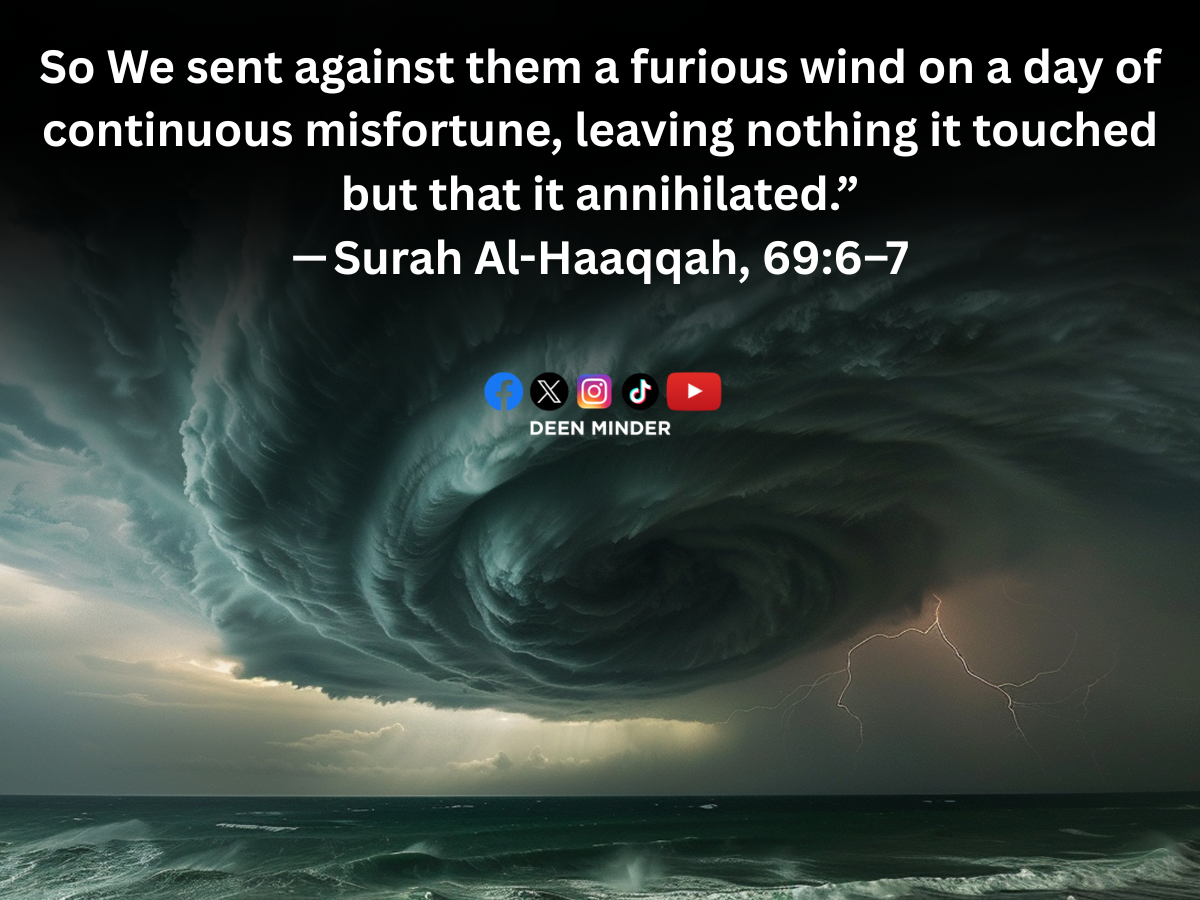
“So We sent against them a furious wind on a day of continuous misfortune, leaving nothing it touched but that it annihilated.”
— Surah Al-Haaqqah, 69:6–7“So We sent upon them a screaming wind in days of misfortune to make them taste the punishment of disgrace in the worldly life; but the punishment of the Hereafter is more disgracing, and they will not be helped.” (Surah Fussilat, 41:16)
At the same time, the wind can be a source of mercy: bringing rain, cooling the earth, and sustaining life.
“And it is He who sends the winds as bringers of glad tidings, going before His mercy. And We send down pure water from the sky.”
— Surah Al-Furqan, 25:48
Narration explains that whenever the Prophet ﷺ witnessed a strong wind blowing, he would recite the dua during a windstorm as a way of seeking protection from any harm that could be carried by the elements. This is a manifestation of deep faith, acknowledging that all forces of nature are under Allah’s command.
What’s the authentic Dua for Windstorm (From the Sunnah)
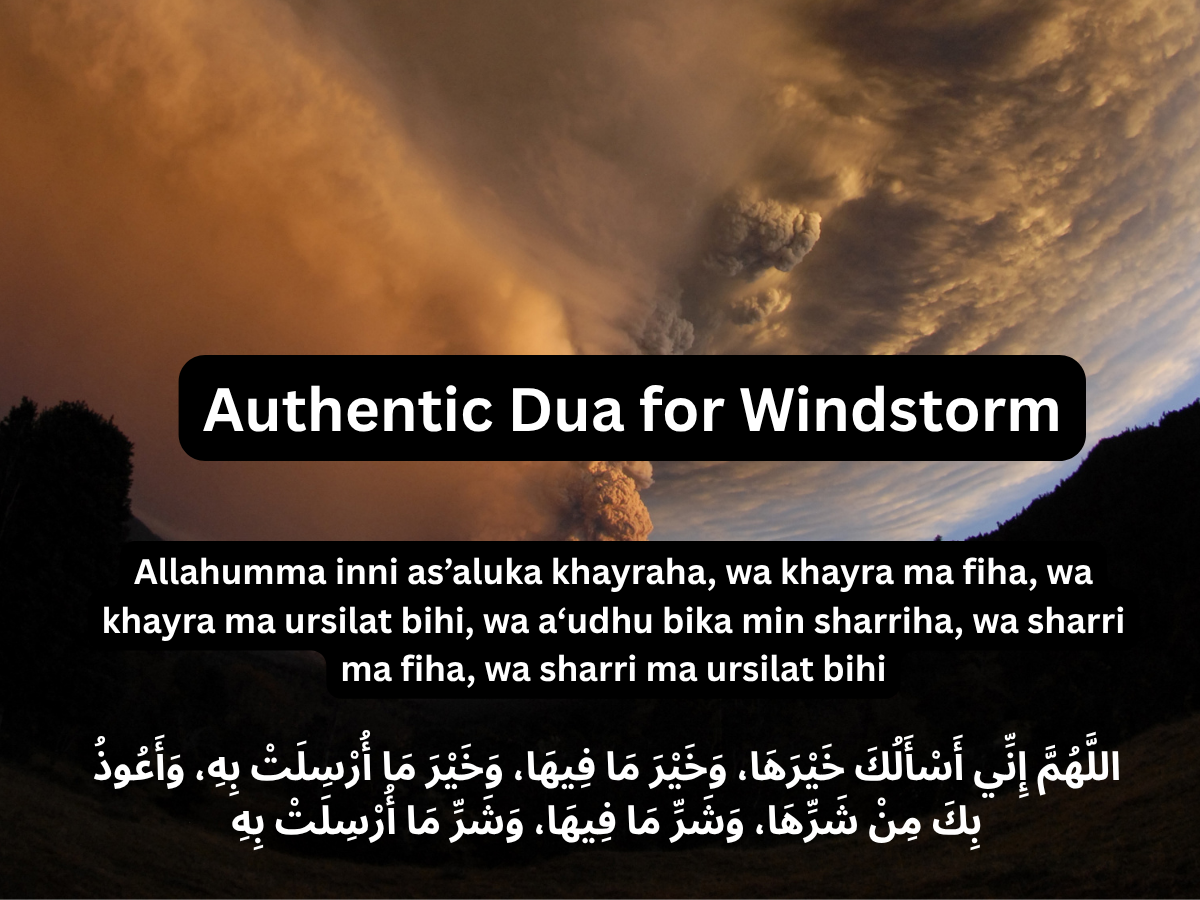
اللَّهُمَّ إِنِّي أَسْأَلُكَ خَيْرَهَا، وَخَيْرَ مَا فِيهَا، وَخَيْرَ مَا أُرْسِلَتْ بِهِ، وَأَعُوذُ بِكَ مِنْ شَرِّهَا، وَشَرِّ مَا فِيهَا، وَشَرِّ مَا أُرْسِلَتْ بِهِ
Allahumma inni as’aluka khayraha, wa khayra ma fiha, wa khayra ma ursilat bihi, wa a‘udhu bika min sharriha, wa sharri ma fiha, wa sharri ma ursilat bihi
English Translation
“O Allah, I ask You for its good, the good within it, and the good it was sent with. And I seek refuge in You from its evil, the evil within it, and the evil it was sent with.”
This powerful supplication encompasses both seeking good and protection from harm, acknowledging that every force of nature carries potential benefit and risk, all under Allah’s command. Reciting this dua during a windstorm reminds the believer that good and evil come only by Allah’s will, and instils spiritual protection and calmness, making the believer mindful of Allah’s omnipotence.
The Shorter Dua during a Windstorm
In moments of panic or forgetfulness, the Prophet ﷺ also taught a shorter version that is easy to memorise and recite:
اللَّهُمَّ إِنِّي أَسْأَلُكَ خَيْرَهَا وَأَعُوذُ بِكَ مِن شَرِّهَا
Allahumma inni as’aluka khayraha wa a’udhu bika min sharriha
English Translation:
“O Allah, I ask You for its good and seek refuge in You from its evil.”
This concise version is especially useful during sudden gusts or when the storm intensifies, allowing the believer to maintain focus and trust in Allah.
Why You Should Never Curse the Wind in Islam
The Prophet ﷺ explicitly forbade cursing the wind. This is because the wind, like all created elements, merely obeys Allah. Ibn Abbas reported: A man cursed the wind in front of the Prophet, peace and blessings be upon him. The Prophet said,
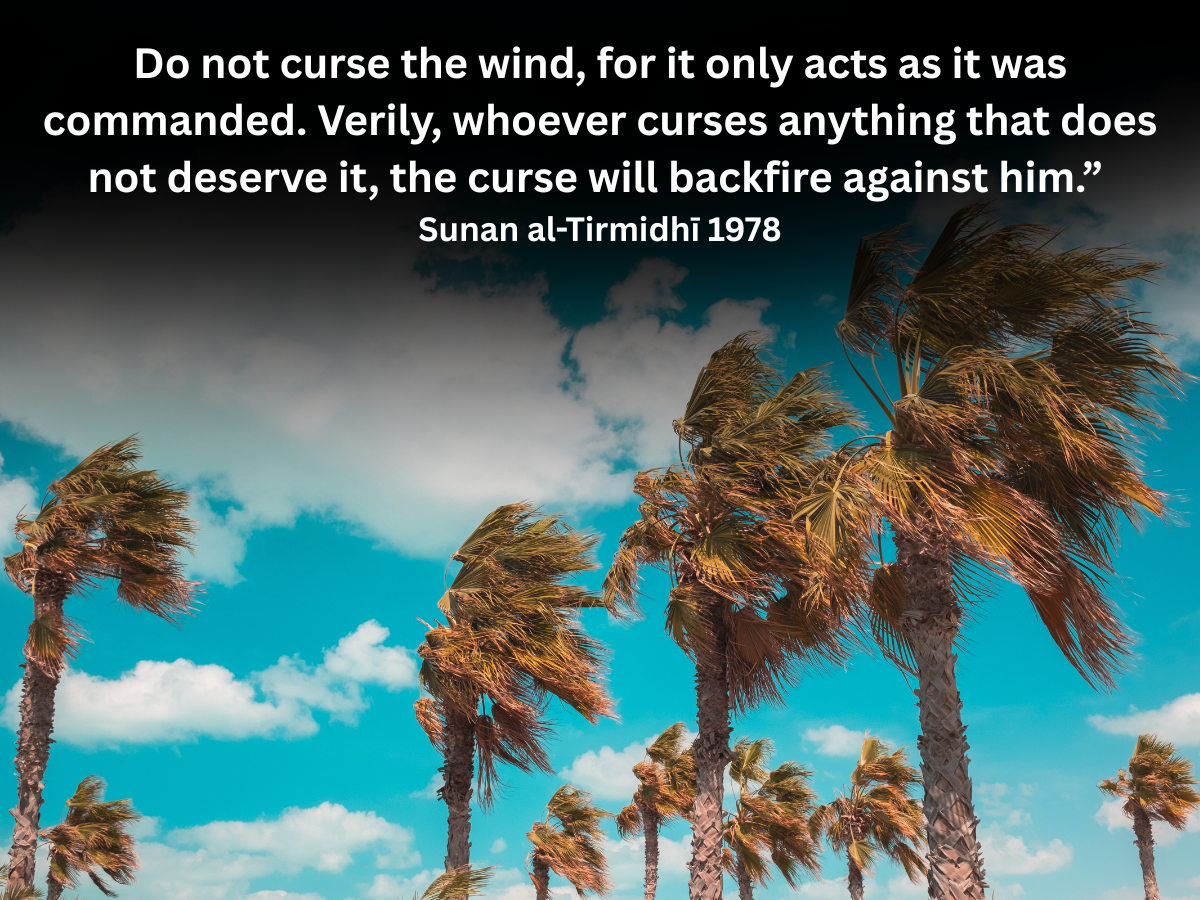
“Do not curse the wind, for it only acts as it was commanded. Verily, whoever curses anything that does not deserve it, the curse will backfire against him.” Sunan al-Tirmidhī 1978
Instead, the Sunnah teaches us to respond with prayer, gratitude, and reflection. The dua for windstorm is the prescribed method: it acknowledges the wind’s power, seeks Allah’s protection from harm, and asks for the benefit contained within the storm. The wind is a creation of Allah, and like all creation, it does not act independently. Allah says..
“And it is He who sends the winds as bringers of glad tidings, going before His mercy. And We send down pure water from the sky.”
— Surah Al-Furqan, 25:48
Every gust, every swirl, and every storm follows divine command. The wind may bring benefit, cooling the earth, bringing rain, dispersing seeds, or it may bring destruction, as with past nations like the people of ‘Aad. Recognising this ensures that our response is mindful and reflective, not rebellious or ingrateful.
What Should You Do During a Windstorm in Islam? (Practical Sunnah Guide)
1. Make the Dua During a Wind Storm
The first and most important action is to immediately turn to Allah in supplication. The Prophet ﷺ taught us the authentic dua for windstorms, reciting it whenever the winds intensified or a storm approached. This dua is a reminder that all power belongs to Allah alone, and no harm can occur except by His will. Reciting the Dua during a windstorm is both a shield and a practice of humility.
2. Avoid Cursing the Wind
As previously mentioned, the Prophet ﷺ explicitly forbade cursing the wind, because it is a creation of Allah and acts solely by His command. Complaining or cursing the wind is a form of ingratitude and shows a lack of awareness of Allah’s wisdom. Instead, the believer should make supplications and remember that every natural phenomenon is a manifestation of Allah’s decree.
3. Increase in Dhikr and Istighfar
Beyond the specific dua for windstorm, the general remembrance of Allah (dhikr) is highly recommended during times of intense natural phenomena by saying:
- Astaghfirullah (I seek forgiveness from Allah)
- SubhanAllah (Glory be to Allah)
- Alhamdulillah (All praise is due to Allah)
Reciting these phrases not only protects the heart from panic but also purifies the soul.
4. Pray for Protection
Finally, there’s no harm in praying in our language for the safety of ourselves, family, home, and community.
“O Allah, protect our homes, our families, our neighbors, and the entire community from harm. Shield us from the evil of this storm, and grant us safety, mercy, and peace.”
By following these steps, a Muslim navigates storms with a balanced heart, reflecting humility, reliance on Allah, and practical wisdom. The storm becomes a reminder of Allah’s majesty, a moment of spiritual growth, and a time to strengthen the connection with the Creator. It is recommended to say the dua for thunder when seeing or hearing thunder too as a means of remembering Allah’s power.
We ask Allah to protect us, our families, and our homes from every danger. Make winds a mercy for us, not a punishment. Fill our hearts with faith, our tongues with Your remembrance, and our lives with Your protection. Aameen.
