


SubḥanAllah… The month that began with the sweet anticipation of fasting is now preparing to say goodbye. The first fast arrives with excitement, energy, and plans. But before we even realise it, the days pass quietly. One fast becomes ten. Ten becomes twenty. And suddenly, we are about to start the last ten days, and this is why we need to discuss the things to do in the last ten days of Ramadan.
Ramadan is like a guest who arrives with gifts and blessings, yet before you fully settle into his presence, he begins preparing to leave. Some of us spent them in obedience, filling our scales with good deeds. Others… well, others may have let them pass by in a state of heedlessness, occupied with the dunya, its food, its shopping, its dramas.
But do not despair. Do not let Shaytan whisper to you, “You have wasted too much; there is no point now.” By the mercy of Allah, the door is still wide open. In fact, the greatest treasure of the entire year is hidden in the last ten days of Ramadan that remain. This is the night of decree, which Allah says is better than a thousand months. Not only this, but other things to do in the last ten days of Ramadan will be discussed in shaa Allah.
The Prophet Muhammad ﷺ
With the start of the last ten days of Ramadan, the Prophet (ﷺ) used to tighten his waist belt (i.e. work hard) and used to pray all the night, and used to keep his family awake for the prayers. (Sahih al-Bukhari, 2024)
Tightening the waistbelt is an idiom meaning he prepared himself completely, exerting his body and soul in worship. He withdrew from his wives to focus entirely on Allah. He would not just pray and then sleep; he would stay up the entire night seeking the pleasure of his Lord. And he would not go alone but would wake his family. Let’s discuss the things to do in the last ten days of Ramadan for the greatest reward.
Laylatul Qadr (The Night of Power)
When we speak about the things to do in the last ten days of Ramadan, we cannot ignore the greatest treasure hidden within them, the blessed night known as Laylatul Qadr. This is the night that Allah Himself honoured in the Qur’an. It is a night that changes destinies, erases sins, and multiplies rewards beyond human imagination. Allah says:
“Indeed, We sent the Qur’an down during the Night of Decree. And what will make you know what the Night of Decree is? The Night of Decree is better than a thousand months.” (Qur’an 97:1–3)
A thousand months equals more than eighty-three years of worship. One night of sincere worship—standing in prayer, making du’a, weeping for your sins can earn you more reward than an entire lifetime of worship from someone who did not catch this night. The Prophet ﷺ informed us…
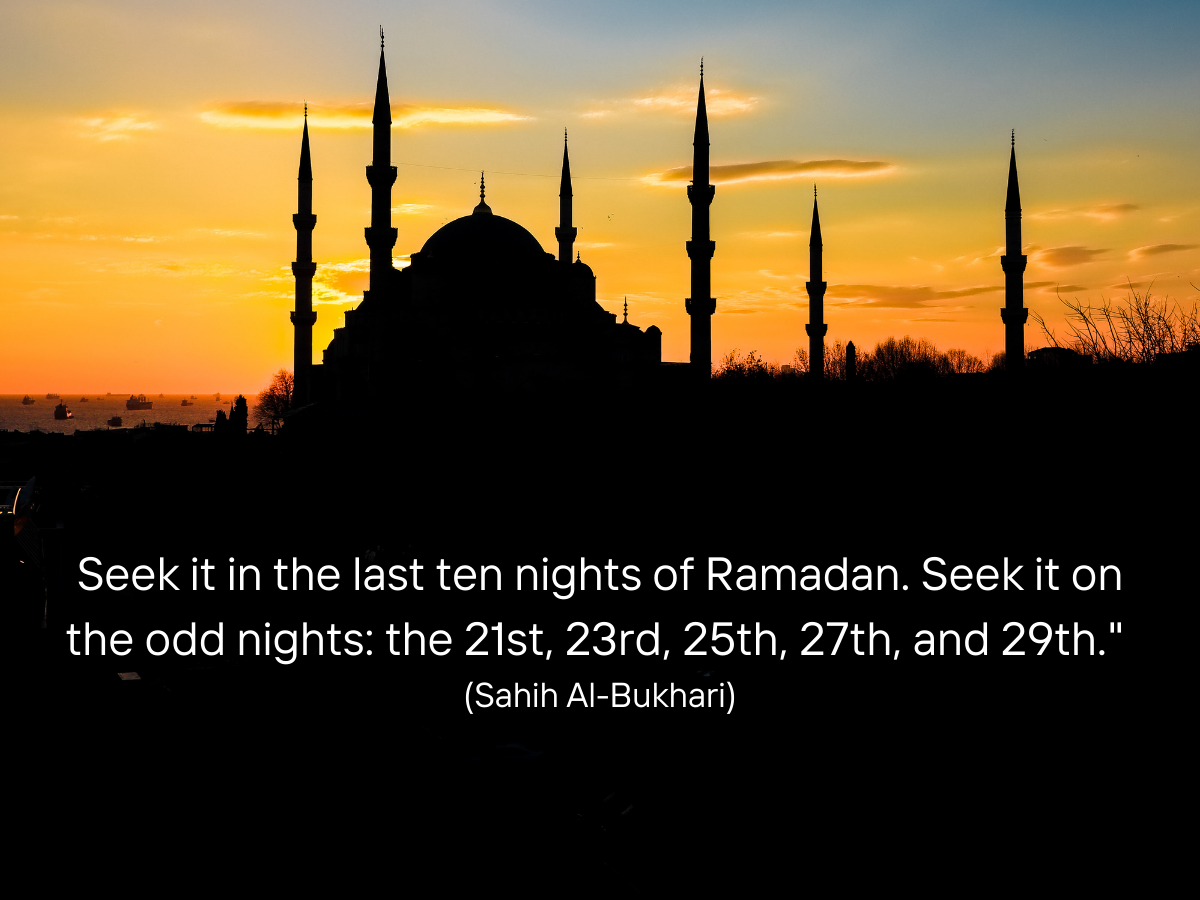
Seek it in the last ten nights of Ramadan. Seek it on the odd nights: the 21st, 23rd, 25th, 27th, and 29th.” (Sahih Al-Bukhari)
So when Muslims search for things to do in the last ten days of Ramadan, one of the greatest goals is to seek Laylatul Qadr through consistent worship every night. But should we do this night..
What to Do on This Night, Laylatul Qadr?
Now the important question arises… What are the best things to do in the last ten days of Ramadan to catch Laylatul Qadr? The answer lies in following the guidance of the Prophet ﷺ. Let us explore the most powerful acts of worship.
1. Pray Qiyam (Night Prayer) with Faith and Hope
Among the greatest things to do in the last ten days of Ramadan is standing before Allah in night prayer, known as Qiyam al-Layl or Tahajjud. The Messenger of Allah ﷺ said:
“Whoever stands in prayer during Laylatul Qadr with faith and hoping for reward, his previous sins will be forgiven.” (Sahih al-Bukhari and Sahih Muslim)
This means the believer stands in prayer with humility, sincerity, and hope for Allah’s mercy. Even if your prayer is not long, the Sunnah is to make it lengthy and make it sincere and focused. Recite the Qur’an with reflection. Make long sujood and speak to Allah from your heart.
2. Making the Dua of Laylatul Qadr
Among the most important things to do in the last ten days of Ramadan is making the special dua taught by the Prophet ﷺ for Laylatul Qadr. Our mother Aisha (رضي الله عنها) once asked the Prophet ﷺ:
“O Messenger of Allah, if I know which night is Laylatul Qadr, what should I say in it?”
He replied:
“Say: Allahumma innaka ‘afuwwun tuhibbul ‘afwa fa’fu ‘anni.”
Meaning:
“O Allah, You are Pardoning, and You love to pardon, so pardon me.” (Reported in Sunan al-Tirmidhi)
The word ‘afuww comes from afw, which means to pardon or to erase. It is not just forgiveness (maghfirah). Forgiveness covers the sin, but pardon erases it completely, as if it never happened. Allah is Al-‘Afuww—the One who erases sins entirely, removing even their trace from the records.
This du’a encompasses both this world and the next. When Allah pardons you, He covers your faults in this life and does not punish you for them in the next. It is the ultimate request. So on these nights, let this du’a be on your tongue always. Repeat it between your prostrations. Whisper it in the depths of the night. Teach it to your spouse, your children, and your parents.
3. Recite the Quran with Tadabbur (Reflection)
Another essential part of the things to do in the last ten days of Ramadan is reciting the Qur’an deeply and thoughtfully. Why? Because the Qur’an itself was first revealed on Laylatul Qadr. Allah says:
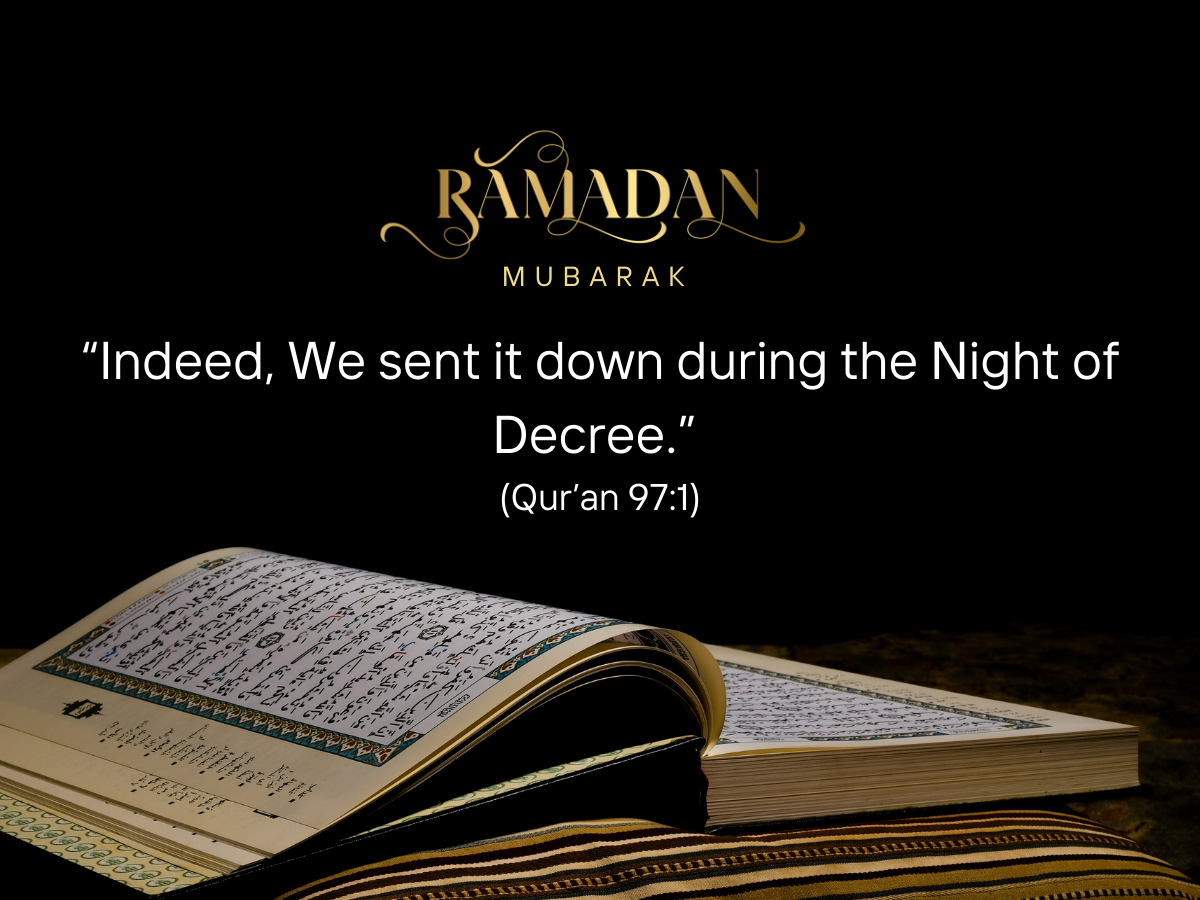
“Indeed, We sent it down during the Night of Decree.” (Qur’an 97:1)
There is a deep connection between Laylatul Qadr and the Quran. Allah tells us that He sent it down on this night. This was the night when the first verses were revealed to the Prophet ﷺ in the cave of Hira. This was the night when the heavens opened, and the words of Allah descended to the lowest heaven, to be brought down gradually to humanity over 23 years.
Therefore, one of the greatest things to do in the last ten days of Ramadan is to spend time with the Quran. Don’t rush and reflect on it. The Salaf used to increase in reciting the Quran in the last ten days of Ramadan, following the example of the Prophet ﷺ. They would combine night prayer with Quran recitation, because the night is the time when the heart is most present and the tongue most fluent.
4. Sincere Repentance (Tawbah an-Nasuh)
Laylatul Qadr is a night to make a clean break from your sins. Not just to ask for forgiveness casually, but to make tawbah an-nasuh, sincere repentance that has four conditions:
- You stop the sin immediately.
- You feel deep regret for having committed it.
- You resolve never to return to it.
- (And if the sin involves the rights of another person, you restore those rights.)
The one who repents from sin is like the one who has no sin. Imagine that! On this blessed night, you can get your sins wiped and become like a newborn baby, pure and innocent.
5. Give Charity (Sadaqah)
Although charity is good at any time, it is especially virtuous on Laylatul Qadr. The scholars have said that giving charity on this night is multiplied just like prayer and recitation. The Prophet ﷺ said:
“Whoever draws near to Allah with a good deed during it (Laylatul Qadr) is like one who performed an obligatory act at another time, and whoever performs an obligatory act during it is like one who performed seventy obligatory acts at another time.” (Reported by Ibn Khuzaymah in his Sahih)
You do not need to have thousands. or mllion before you can give. Give what you can. Even a date, even a smile, even a kind word. The Prophet ﷺ said:
“Protect yourselves from the Fire, even with half a date.” (Sahih Al-Bukhari and Muslim)
6. Do Not Waste the Night in Worldly Talk
My dear brothers and sisters, I must give you a sincere warning. In many Muslim communities, Laylatul Qadr has become a night of socialising. People gather in the mosque, but between prayers, they talk about work, about politics, about food. Some even bring their phones and scroll through social media. Others spend the night cooking elaborate meals for the next day.
This is a tragedy. The night is too short and too precious to be wasted on such things. The Salaf used to protect these nights fiercely. They would avoid even permissible talk to focus completely on Allah. Some of the Salaf would perform ghusl on each of the last ten nights, perfume themselves, and wait for the night in the mosque with full presence of heart. They understood that these nights were their opportunity, and they did not let it slip.
Let us follow their example. Let us turn off our phones. Let us avoid idle chatter. Let us fill our time with prayer, du’a, Quran, and sincere reflection. May Allah make us among those who witness Laylatul Qadr, and may He pardon us and accept our worship. Ameen.
Performing I’tikaf
Among the greatest things to do in the last ten days of Ramadan is a beautiful act of worship named I’tikaf that many Muslims have heard about but may not fully understand. This is disconnecting from the world to connect with the Creator. I’tikaf is the Sunnah of our Prophet (peace be upon him) to seclude himself in the mosque during these ten days, cutting off worldly distractions.
It is a spiritual retreat where a believer withdraws from worldly distractions and devotes themselves completely to worship, reflection, and closeness to their Lord. Our mother ʿĀ’ishah (رضي الله عنها) reported:
“The Messenger of Allah ﷺ used to observe I’tikaf during the last ten days of Ramadan until Allah took his soul, and then his wives observed I’tikaf after him.” (Reported in Sahih al-Bukhari and Sahih Muslim)
This narration alone shows us how serious the Prophet ﷺ was about these final days. When the last ten days of Ramadan arrived, he would not simply increase his worship. He would physically retreat from the world to focus completely on Allah. Why? Because these nights contain Laylatul Qadr, and the Prophet ﷺ wanted to make sure he did not miss a single opportunity to worship during them.
When a believer enters I’tikaf sincerely, their heart begins to soften. The Qur’an feels different. The duʿā’ becomes deeper. The night prayers become more meaningful. This is why the scholars always mention I’tikaf when discussing the things to do in the last ten days of Ramadan. It is one of the most powerful ways to transform these final days into a life-changing spiritual experience.
During this time, you are not allowed to leave except for unavoidable human needs like using the bathroom, eating if food is not brought to you, or performing ghusl when necessary. What do you do during those ten days? You pray. You recite the Quran. You make dhikr and other acts of worship. One should not engage in any worldly matters. He should only be occupied with worship and obedience to Allah.
The Pre-Eid Obligation: Zakat al-Fitr
This is the final act that every Muslim must not overlook. Among the most important things to do in the last ten days of Ramadan is fulfilling the obligation of Zakat al-Fitr. This charity is not optional. It is a mandatory duty upon every Muslim who possesses the means, regardless of age or gender. The Messenger of Allah ﷺ made it clear that every household should ensure it is given on behalf of themselves and those under their care.
ʿAbdullah ibn ʿUmar (رضي الله عنهما) reported:
“The Messenger of Allah ﷺ made Zakat al-Fitr obligatory—a sa’ of dates or a sa’ of barley—upon the slave and the free, the male and the female, the young and the old among the Muslims. He commanded that it be given before the people go out to the Eid prayer.” (Reported in Sahih al-Bukhari and Sahih Muslim)
The head of the household is responsible for paying Zakat al-Fitr for himself and for all those he supports, his wife, his children, and his parents if they are under his care. He even pays for the unborn child if it is recommended, though it is not obligatory. So when we discuss the essential things to do in the last ten days of Ramadan, ensuring that Zakat al-Fitr is paid correctly and on time becomes a vital part of completing the month properly.
This Zakat al-Fitr acts like a final cleansing for our fasts, removing the small imperfections that may have occurred during the month. At the same time, it serves a beautiful social purpose: ensuring that the poor and needy can celebrate Eid with dignity and joy. Imagine the beauty of this system. As one Muslim prepares to celebrate Eid al-Fitr, another Muslim who was struggling financially also receives food to share with his family.
In this way, Ramadan ends not just with personal worship but with compassion and generosity toward others. Read more about Zakat Al Fitr here
May Allah accept our fasting, our prayers, and our charity. May He allow us to witness Laylatul Qadr with faith and sincerity. And may He grant us many more Ramadans filled with His mercy. Aameen
