


My dear brother, my dear sister, before we delve into the rewards of performing Umrah and the benefits of Umrah, let me ask you something. How many times have you seen the Kaaba on your phone screen? How many videos of the Haram have passed before your eyes? You’ve watched pilgrims cry, cling to the cloth of the Kaaba, raise their hands in du‘ā’ and maybe, just maybe, your chest tightened a little.
Nothing compares to standing before the House of Allah on your own feet. The first time your eyes fall upon the Kaaba, your heart will tremble. Because it’s not a building you are looking at. It is the Qiblah of the Ummah. It is the House built by Ibrahim (ʿalayhis-salām) and his son Ismail for the worship of Allah alone. It is the direction towards which you have prayed your entire life.
This is why the rewards of performing Umrah are not ordinary rewards. And the benefits of Umrah are not limited to what the eye sees, but what we receive physically and spiritually in this world and the hereafter. Before we dive deep into the rewards of performing Umrah, you must understand what Umrah truly is. Because when you understand the journey, you understand why the reward is so immense.
What Is Umrah in Islam?
Umrah is the specific act of visiting the Sacred House of Allah (the Kaaba) in Makkah to perform specific, sacred rites. These rites are:
- Ihram: Entering a state of spiritual purity and intention.
- Tawaf: Circumambulating the Kaaba seven times.
- Sa’i: Walking briskly seven times between the two small hills of Safa and Marwah.
- Halq or Taqsir: Shaving or trimming the hair of the head
It is a sacred journey to the Kaaba, not tourism, not culture, not sightseeing, but pure worship. Allah says:
“And complete the Hajj and the Umrah for the sake of Allah…” (Surah Al-Baqarah, 2:196)
This is a crucial point that every Muslim must understand. Hajj is an obligatory act of worship once in a lifetime for every Muslim who is physically and financially able. Umrah, however, is different. The majority of scholars held that Umrah is a highly recommended Sunnah Mu’akkadah (a confirmed and emphasised voluntary act), but it is not obligatory in the same way as Hajj is.
The safer and more cautious view is to perform it if you are able, as its status is so elevated that the Prophet (peace be upon him) urged us to do it repeatedly. Unlike Hajj, which is performed during specific days in Dhul-Hijjah, Umrah can be performed at any time of the year.
Forgiveness of Sins – The Greatest Reward of Performing Umrah
This is the greatest of all the rewards of performing Umrah, the one that should make every believer’s heart tremble with hope to perform it. The Messenger of Allah ﷺ said:
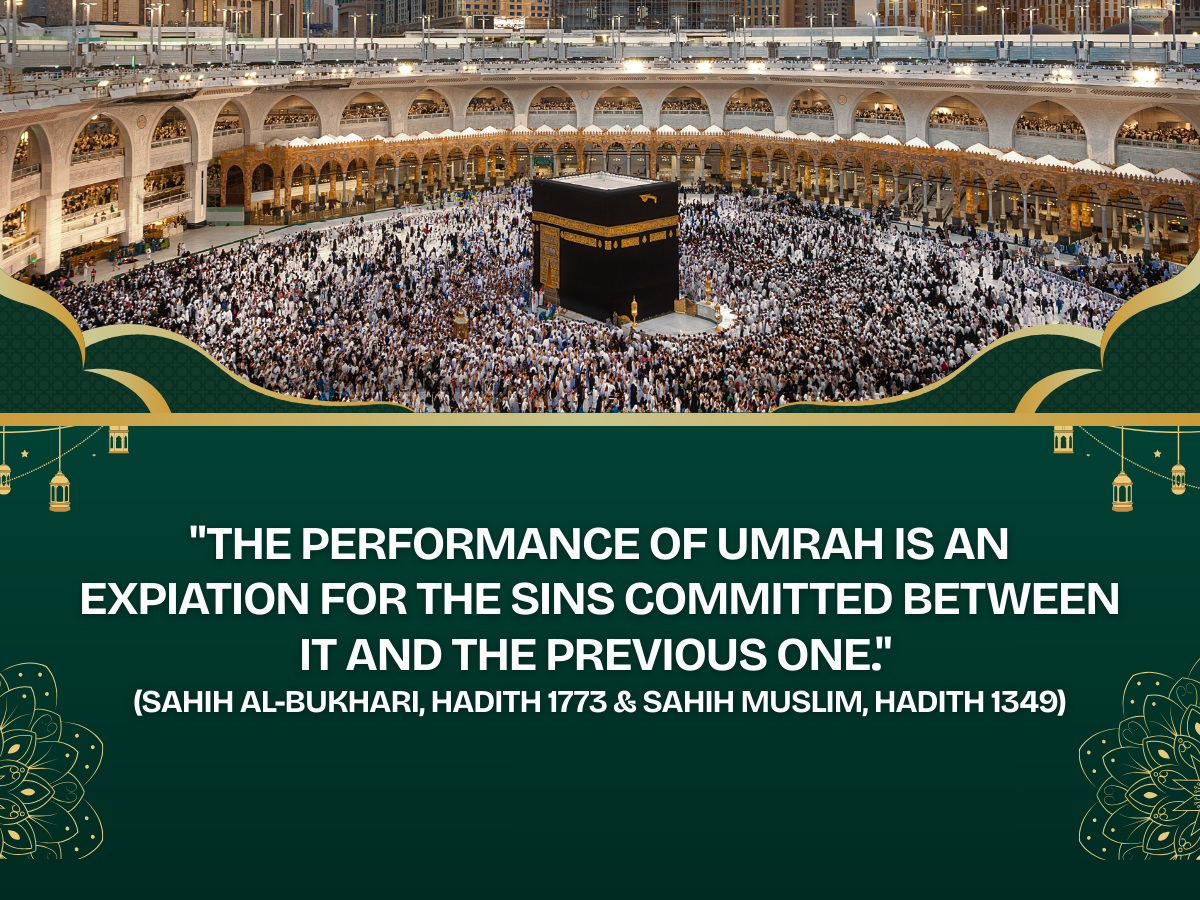
“The performance of Umrah is an expiation for the sins committed between it and the previous one.” (Sahih al-Bukhari, Hadith 1773 & Sahih Muslim, Hadith 1349)
This is one of the greatest benefits of Umrah. It means that one’s sin is covered over, erased, and concealed by the mercy of Allah. For the rewards of performing Umrah to be granted, the deed must be accompanied by three essential elements:
1. Sincerity (Al-Ikhlas): The Umrah must be performed purely for the sake of Allah, not for show off. If your intention is pure, the reward is pure.
2. Following the Sunnah: Your Umrah must be according to the guidance of the Prophet ﷺ. No innovations. No invented rituals. The Messenger ﷺ said:
“Take from me your rites.”
Correct worship multiplies the rewards of performing Umrah.
3. Repentance (At-Tawbah): The one who goes for Umrah should go with a heart that has already turned away from sin. They should not go with the intention of continuing in disobedience after the Umrah
4. Halal Income (Al-Mal Al-Halal): The journey itself must be pure. The means you provide in performing the Umrah must all be from halal earnings, not from haram money like money from betting, riba and the like.
Umrah in Ramadan is Equivalent to Hajj
Among the greatest benefits of Umrah is the reward of Hajj one gets if it is performed during Ramadan. The evidence of this is the story narrated by Ata, who said
I heard Ibn `Abbas saying, “Allah’s Messenger (ﷺ) asked an Ansari woman (Ibn `Abbas named her but `Ata’ forgot her name), ‘What prevented you from performing Hajj with us?’ She replied, ‘We have a camel and the father of so-and-so and his son (i.e. her husband and her son) rode it and left one camel for us to use for irrigation.’ He said (to her), ‘Perform `Umra when Ramadan comes, for `Umra in Ramadan is equal to Hajj (in reward), or said something similar.” Sahih al-Bukhari, 1782
Is Umrah in Ramadan Equal to Hajj?
No. Umrah in Ramadan does not replace the obligation of Hajj. If Hajj is fard upon you and you have not performed it, Umrah in Ramadan does not fulfil that pillar of Islam. The one who performs Umrah in Ramadan receives the immense blessing of a reward similar to Hajj, but the obligation of Hajj remains upon them if they are capable.
This is a matter of ijma (consensus) among the scholars. No scholar of Ahlus-Sunnah has ever said that performing Umrah in Ramadan removes the obligation of Hajj from a person who is able to perform it. If Hajj becomes obligatory upon you, meaning you have the physical and financial ability, you must still perform Hajj, even if you have performed Umrah in Ramadan a hundred times.
This is among the greatest rewards of performing Umrah that Allah allows us to earn the reward of Hajj, simply because we combined a noble act with a noble month. SubhanAllah. This is why the benefits of Umrah in Ramadan are great and should be utilised by whoever is not capable of performing the full Hajj yet, and should be done when abl because Hajj is obligatory.
Umrah Removes Poverty and Hardship
Among the most profound benefits of Umrah is that its remove poverty and hardship from the life of the believer. This is the words of the Messenger of Allah (peace and blessings be upon him). This is one of the powerful yet often overlooked rewards of performing Umrah because people think about the money they spend and not the benefits or rewards. The Messenger of Allah, peace and blessings be upon him, said,
“Perform the Hajj and ‘Umrah pilgrimages, one after another, for they both erase poverty and sins just as the furnace removes impurity from iron, gold, and silver. There is no reward for an accepted Hajj but Paradise.” Sunan al-Tirmidhī 810
This, my dear brothers and sisters, is what Umrah does to your soul and to your sustenance. It purifies you. It strengthens you. It removes from your life the impurities that hold you back, both the spiritual impurities of sin and the material impurities that block the flow of Allah’s provision. Wealth spent in the path of Allah is never truly lost. Rather, it is purified, and the remaining wealth is blessed.
Umrah is not a transaction. It is an act of worship. The relationship between the servant and his Lord is not a commercial exchange. It is a relationship of love, of trust, of submission. We speak of Umrah removing poverty, we are speaking of barakah, a blessing that comes from Allah in ways we cannot predict or measure. This is from the great rewards of performing Umrah.
It does not mean that every person who performs Umrah will automatically become rich in material wealth. Rather, it means that Allah opens doors for them, blesses what they have, and grants them contentment. Although this barakah can come in the form of wealth and also anything like unexpected opportunities, protection from financial loss and sustenance from sources you never imagined.
Allah Hosts Those Who Perform Umrah and Answers Their Prayer
Among the most beautiful rewards of performing Umrah is that you are not merely a traveller. You are a guest of Ar-Rahman. Part of the benefits of Umrah is this honour that Allah Himself bestows upon the pilgrim. This is not merely a trip. This is not merely a vacation. This is an invitation from the Lord of the Worlds to come as His guest. Not only that, He answers your dua when you call upon him as a pilgrim performing Umrah. The Prophet ﷺ said
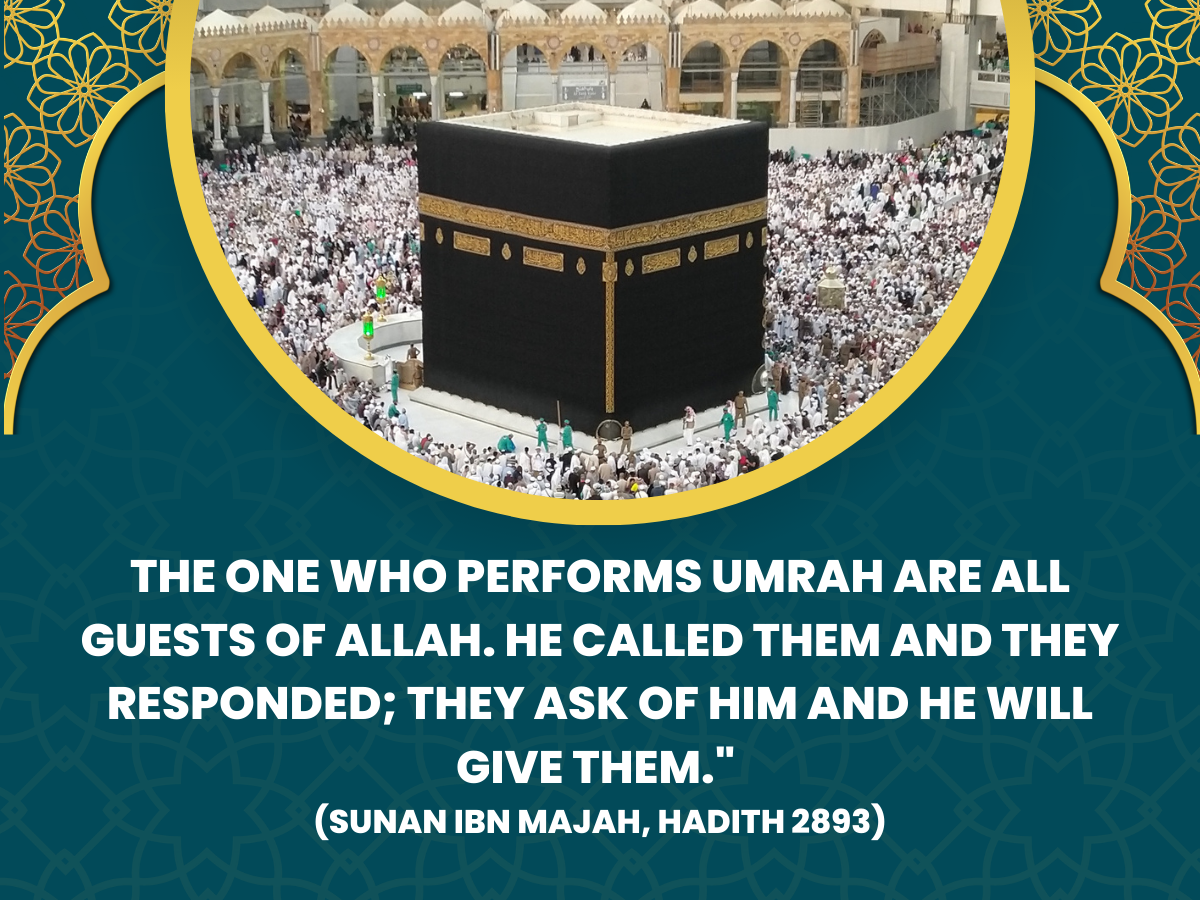
“The one who fights for the sake of Allah, the pilgrim who goes for Hajj, and the one who performs Umrah are all guests of Allah. He called them and they responded; they ask of Him and He will give them.” (Sunan Ibn Majah, Hadith 2893; authenticated by Sheikh Al-Albani as Sahih)
When we say that the pilgrim is a guest of Allah, we mean that Allah has extended an invitation to His servants to come to His house. He has made the means easy for them. He has opened the doors for them. And when they arrive, He treats them with the honour and generosity that is befitting of a host and what host is more generous than Allah?
This is also among the great benefits of Umrah because Allah guarantees that your prayers will be answered. The hadith is clear: “they ask of Him, and He will give them.” This is a promise from the One who never breaks His promise.
Why Are the Pilgrims’ Prayers So Special?
- First, the pilgrim is in a state of complete submission to Allah.
- Second, the pilgrim is in the most blessed place on earth.
- Third, the pilgrim is a traveller.
- Fourth, the pilgrim is a guest.
All these states, places and conditions were also mentioned by our Prophet in several hadiths as the means by which prayers are answered.
Means to Increased Reward for Every Prayer in Masjid al-Haram
My dear brothers and sisters, one of the most astounding and motivating benefits of Umrah is the multiplication of rewards for prayer in the sacred places. The Messenger of Allah ﷺ said:
“One prayer in this mosque of mine is better than one thousand prayers elsewhere, except Masjid al-Haram. And one prayer in Masjid al-Haram is better than one hundred thousand prayers elsewhere.” (Reported by Ahmad and others; authenticated by Muhammad Nasir al-Din al-Albani)
This is one of the most mind-blowing rewards of performing Umrah by multiplying your lifetime of worship. If you pray one obligatory prayer in Masjid al-Haram, it equals 100,000 prayers elsewhere. If you pray five daily prayers there for one day? That equals 500,000 prayers. Stay for five days? 2.5 million prayers.
Do you see what Allah is offering you? This is from the tremendous Benefits of Umrah that your scale of good deeds becomes heavier in days than others accumulate in years. This multiplication applies to both obligatory and voluntary prayers. Whether you are performing the fard (obligatory) prayer in congregation, or you are sitting alone in a corner praying nawafil (voluntary prayers), the same multiplier applies.
My dear brother, my dear sister, when we speak about the rewards of performing Umrah, we are not speaking about a simple journey from one country to another. We are speaking about:
- Forgiveness that wipes away sins.
- Reward equal to Hajj when performed in Ramadan.
- Poverty is being replaced with barakah.
- Being honoured as a guest of Allah.
- Dua is being answered.
- One prayer equals 100,000 prayers.
- A complete purification of the heart, wealth, and body.
We ask you, Ya Allah, to grant us the opportunity to come to Your house, to perform Hajj and Umrah and accept it from us.
