

All praise is due to Allah, the Most Merciful, the Most Just, who has honored men and women with dignity and purpose. Throughout history, the role of women in Islam has been debated, misrepresented, and often misunderstood. Women in Islam: Divine Equality, Sacred Rights, and Modern Empowerment seeks to uncover the truth by exploring the Qur’an’s vision for women—one of dignity, autonomy, and spiritual equality. This discourse challenges stereotypes by examining the lives of influential Muslim women, analyzing Quranic principles, and distinguishing faith from cultural traditions. It highlights the profound status Islam grants to women in education, leadership, and society.
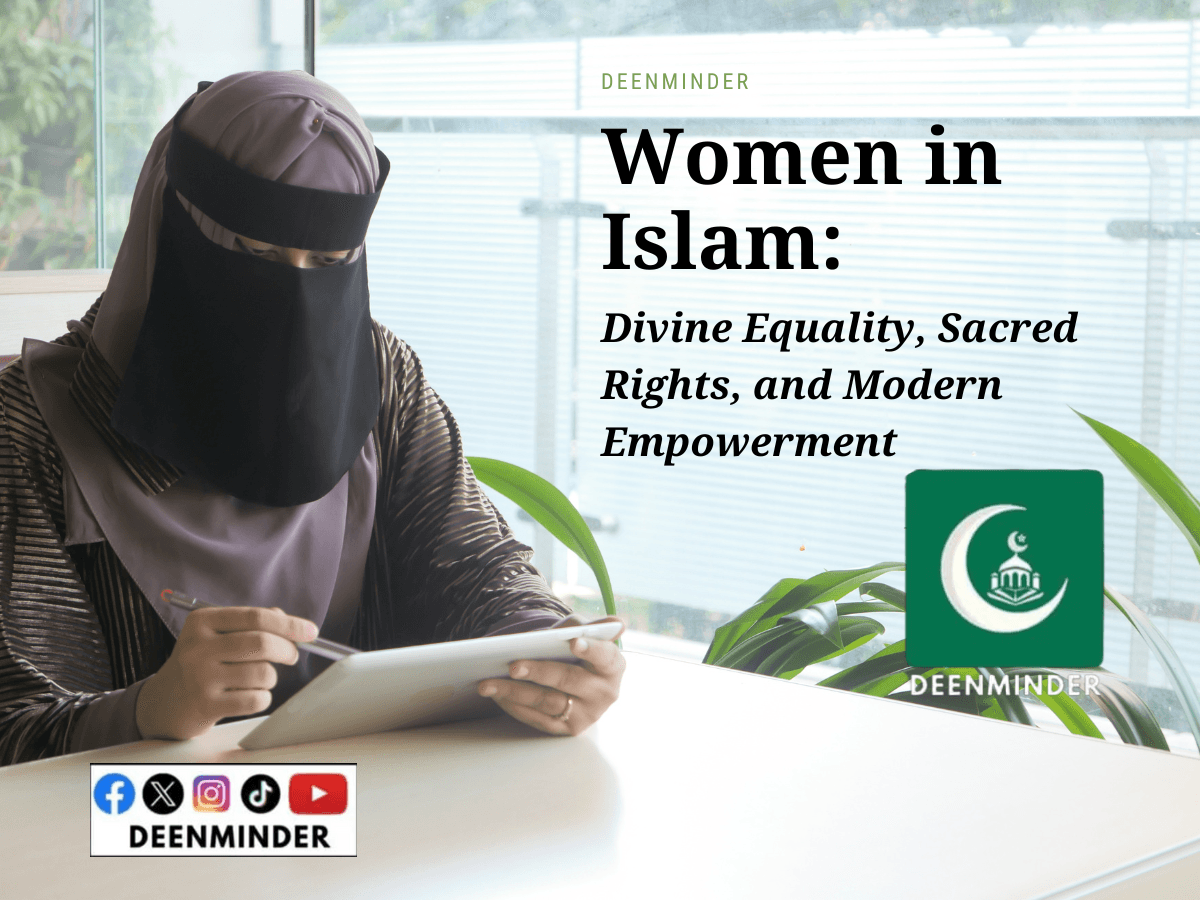
Women in Islam
In a world where Muslim women are often seen through the lens of stereotypes, there is a compelling need to rediscover the divine blueprint that Islam has provided. The Qur’an and Hadith illuminate a vision of dignity, equality, and societal contribution for women. Through historical accounts, Quranic verses, and real-life examples, this exploration aims to uncover the true role and rights of women in Islam.
“O humanity! Be mindful of your Lord, Who created you from a single soul, and from it He created its mate…”
— Qur’an 4:1
Women in Islam as Partners in Faith
Khadijah bint Khuwaylid, the first to embrace Islam, exemplifies this equality. A woman of wealth and influence, she reassured the Prophet during his first revelation, affirming his noble character. Her leadership and support cemented the role of women as integral to the foundation of Islam. The Qur’an declares absolute spiritual parity:
“Whoever does righteousness, whether male or female, while they are believers—We will surely grant them a life of purity, and We will reward them according to the best of what they used to do.”
— Qur’an 16:97
Women in Islamic Education: A Legacy of Scholarship
Aisha bint Abu Bakr, a scholar of unmatched intellect, narrated over 2,200 Hadiths and taught both men and women. The legacy of female scholars in Islam continues to inspire educational movements globally, ensuring that knowledge remains a universal right.
In the golden age of Islam, universities like Al-Qarawiyyin, founded by Fatima al-Fihri, became beacons of knowledge. Today, Muslim women continue to lead academic and religious discourse, bridging the historical legacy with modern aspirations. The Prophet emphasized education for all:
“Seeking knowledge is obligatory upon every Muslim.”
— Sunan Ibn Mājah 224
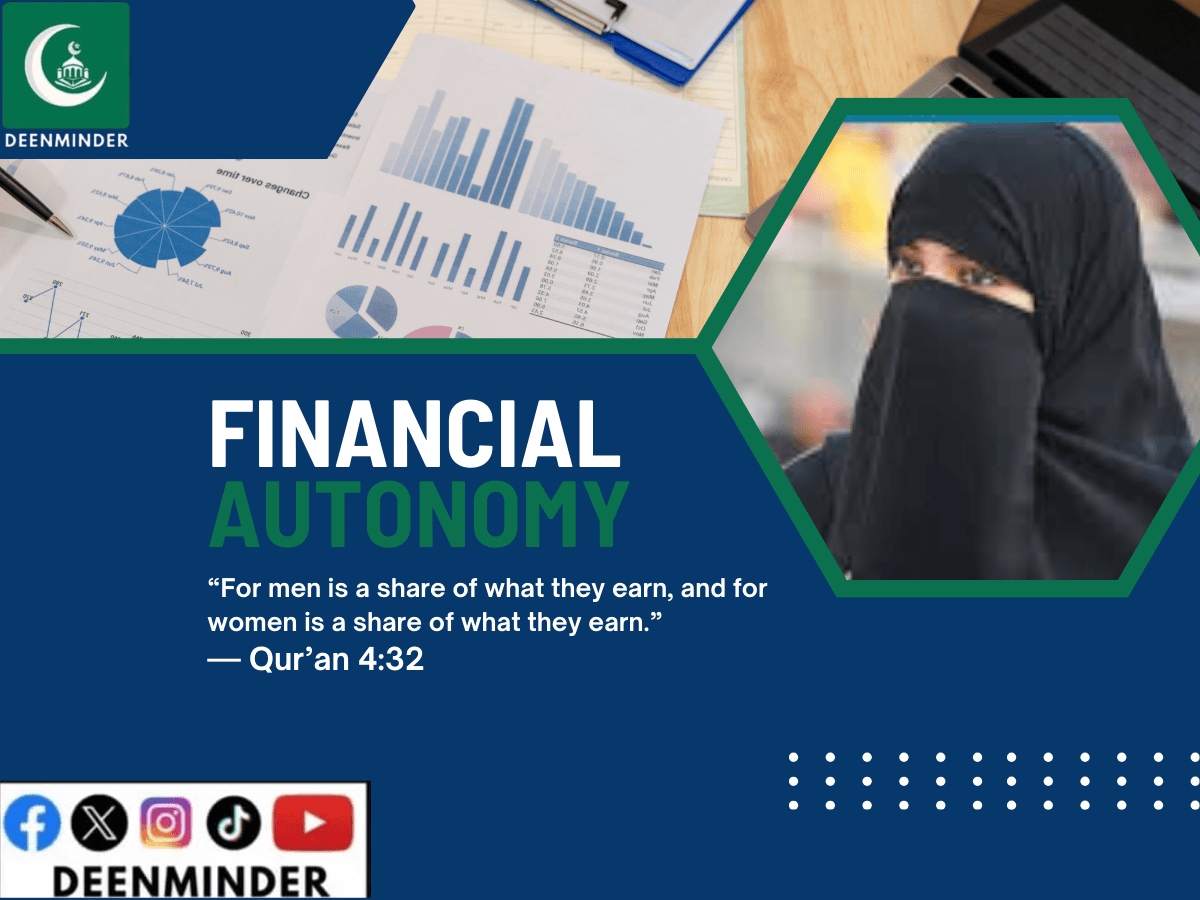
Financial Autonomy for Muslim Women
Unlike in many patriarchal traditions, a woman’s wealth in Islam remains her own, free from matrimonial obligation. The mahr concept is not a transaction but a divine gift reinforcing financial security.
Islamic history is rich with women who excelled in trade and finance. Khadijah was a merchant of great influence, and contemporary women in Islam continue to break barriers in business and entrepreneurship, drawing from their historical predecessors.
Islam granted women economic independence long before many modern societies:
“For men is a share of what they earn, and for women is a share of what they earn.”
— Qur’an 4:32
Marriage & Family: Consent, Compassion, and Justice
Islam protects a woman’s right to choose her spouse. It also commands kindness in marital relationships. As seen in the Quran the hadith of the Prophet. The right to khul’u (divorce initiated by women) is another example of Islam’s commitment to fairness in relationships. In many societies today, Islamic courts uphold these rights, ensuring that women retain autonomy in their marital choices. The conversation on fair treatment within marriage is evolving, with scholars and activists working to reinforce these divine principles.
“A woman who has been previously married has more right to herself than her guardian, and a virgin’s consent must be sought.”
— Sahih al-Bukhari 6968
“And live with them in kindness…”
— Qur’an 4:19
Women in Islam Hijab: Debunking Myths
Contrary to misconceptions, hijab is a personal act of devotion, not oppression. Similarly, female testimony in Islamic jurisprudence varies based on context, ensuring fairness rather than inferiority.
The discussion on hijab has gained traction in recent times, with many Muslim women reclaiming it as a symbol of empowerment rather than subjugation. The nuances of hijab as a choice and an identity marker continue to shape global narratives. Islamic modesty guidelines apply to both men and women:
“Tell the believing men to lower their gaze…”
— Qur’an 24:30-31
Muslim Women in Leadership
In the time of the Prophet (Peace be upon him), women played significant roles in governance, scholarship, and public life. Shifa bint Abdullah was appointed as a market supervisor in Madinah, demonstrating that women held administrative positions under Islamic leadership. Umm Salama, a wife of the Prophet (Peace be upon him), provided strategic counsel during the Treaty of Hudaybiyyah, showing that women’s insights and decisions shaped the course of Islamic history.
Today, women in Islam continue to lead in various sectors, including education, politics, and business. Figures such as Dr. Hayat Sindi in biotechnology and Fatima al-Fihri in academia remain inspirations, proving that leadership and intellectual contributions are not limited by gender but embraced within the framework of Islam. Islam’s recognition of female leadership is evident in both the Qur’an and Sunnah. The Qur’an celebrates Queen Bilqis for her wisdom and governance:
She said, “O eminent ones, advise me in my affair. I would not decide a matter until you witness [for] me.” (Q 27:32)
Culture vs. Faith: Separating Truth from Tradition
Throughout history, many oppressive practices against women have been mistakenly attributed to Islam when, in reality, they stem from deep-seated cultural norms and traditions. Islam, as revealed in the Qur’an and exemplified by the Prophet Muhammad (Peace be upon him), upholds the dignity, autonomy, and rights of women. However, cultural customs in various regions have sometimes overshadowed or distorted these divine principles, leading to injustices that Islam itself condemns.
For example, forced marriages —where women are denied the right to choose their spouses—are common in some societies, yet they are entirely contrary to Islamic teachings. The Prophet (Peace be upon him) explicitly annulled the marriage of a woman who was married without her consent, emphasizing that her agreement is essential (Sunan Abu Dawood, 2091). Similarly, the wrongful restriction of women’s access to education in some communities contradicts the Prophet’s (Peace be upon him) clear directive that seeking knowledge is obligatory for both men and women.
Another widely misunderstood issue is domestic abuse. In some cultures, violence against women is tolerated or even justified, but Islam unequivocally forbids such oppression. The Prophet (Peace be upon him), known for his unparalleled kindness toward his wives, never struck a woman and instructed his followers to treat them with the utmost respect and care. He stated:
“The best of you is the one who is best to his wife, and I am the best of you to my wives.” (Sunan Ibn Majah, 1977)
Moreover, the misinterpretation of Islamic dress codes has led to both extremes —compulsory enforcement in some regions and outright bans in others. The hijab, rather than being a tool of oppression, is an act of devotion and identity for many women in Islam. Yet, cultural expectations sometimes reduce it to a symbol of control rather than a personal spiritual choice.
In some societies, restrictions on women’s financial independence, seeking knowledge, and social engagement are justified in the name of Islam when, in fact, they stem from patriarchal customs. Islam granted women the right to own property, engage in trade, and participate in governance long before many Western societies. The Prophet’s (Peace be upon him) wife, Khadijah, was a successful businesswoman, and the Qur’an highlights the leadership of Queen Bilqis, demonstrating that women’s influence extends beyond the domestic sphere.
Recognizing and dismantling these harmful cultural practices is essential for restoring the true status Islam grants to women. It is the responsibility of Muslim scholars, educators, and communities to differentiate between religious obligations and societal norms, ensuring that women’s rights are upheld under divine guidance rather than cultural bias. The solution lies in education, empowerment, and a return to the authentic teachings of the Qur’an and Sunnah, free from the distortions of tradition.
Lastly, women in Islam have their divined rights, as ordained by Allah and these rights must be respected by their husbands, fathers and society at large.
