


Praise be to Allah. May His peace and blessings be upon our Prophet Muhammad. There are misconceptions about the month of Rajab as it is distinguished in the Islamic lunar calendar and is recognized as one of the four sacred months mentioned in the Qur’an. This comprehensive exposition explores the significance of Rajab, its status as a holy month, its associated practices, and the prevalent misconceptions surrounding it, like fasting in Rajab.
Despite its revered status, Misconceptions about the month of Rajab have emerged over time, leading to practices and beliefs that diverge from authentic Islamic teachings. In this discussion, we will address these misconceptions to clarify the correct understanding of the month and guide Muslims toward a more accurate observance of its sanctity.
The Sanctity of the Month of Rajab
The month of Rajab, revered as one of the sacred months in Islam, often stirs a deep sense of spirituality and devotion among Muslims. However, like many aspects of Islamic tradition, it has been clouded by misconceptions and innovations over time. While the sanctity of Rajab is undeniable, certain practices associated with this month have taken on a life of their own, some of which deviate from authentic Islamic teachings.
These misconceptions not only misguide believers but also undermine the true essence of the month, diverting attention from its core purpose of worship and reflection. This exploration seeks to unravel the myths surrounding Rajab, shedding light on the correct practices and offering clarity on how to honor this sacred month by the Qur’an and the Sunnah of the Prophet Muhammad (peace be upon him).
The Sacred Months in Islam
The Islamic tradition recognizes four sacred months: Rajab, Dhu’l-Qa’dah, Dhu’l-Hijjah, and Muharram. Their sanctity is emphasized in the Qur’an in Surah al-Tawbah:
Indeed, the number of months with Allah is twelve [lunar] months in the register of Allah [from] the day He created the heavens and the earth; of these, four are sacred. That is the correct religion [i.e., way], so do not wrong yourselves during them
This verse underscores the importance of these months, highlighting that they possess a unique status whereby acts of sin may carry far greater consequences than during other times of the year.
Sanctity of the Sacred Months in Pre-Islamic Times
In pre-Islamic Arabia, these sacred months were deeply revered, and their significance was widely recognized across diverse tribal communities. Notably, tribal warfare—a characteristic of pre-Islamic society—was suspended during these months, allowing individuals to travel freely, engage in religious rituals, and perform the pilgrimage to the Kaaba without fear of conflict. This tradition facilitated a sense of peace, safety, and social stability among tribes, thereby reinforcing the importance of communal respect and the preservation of sacred practices.
The Month of Rajab as a Sacred Month
Rajab is explicitly named among the sacred months detailed above. This month is particularly highlighted for its prohibition of unjust actions and acts of transgression, which are viewed as especially grievous during this time. The gravity of these prohibitions serves as a reminder to Muslims to intensify their spiritual focus and adherence to righteous conduct. The Qur’anic directive,
“So do not wrong yourselves during them” (Surah al-Tawbah, 9:36).
This showcases the consistent theme of devotion across sacred times.
The Reason for the Sanctity of Rajab
The sanctity of the month of Rajab, along with the other sacred months, is founded on two primary reasons:
- Prohibition of Fighting: Combat and warfare are largely prohibited in these months, with only self-defense being an allowable exception.
- Amplified Accountability: Transgressions committed during these months are considered more heinous, necessitating heightened vigilance in personal conduct. Imam al-Sa’di elaborates that Allah’s command regarding these prohibitions is applicable both to all twelve months and, specifically, to the four sacred months, highlighting their elevated spiritual significance.
Fasting During the Month of Rajab
While no authentic narration explicitly advocates fasting during the month of Rajab, the general practice of fasting during sacred months is encouraged. A weak hadith narrated by Abu Dawud states,
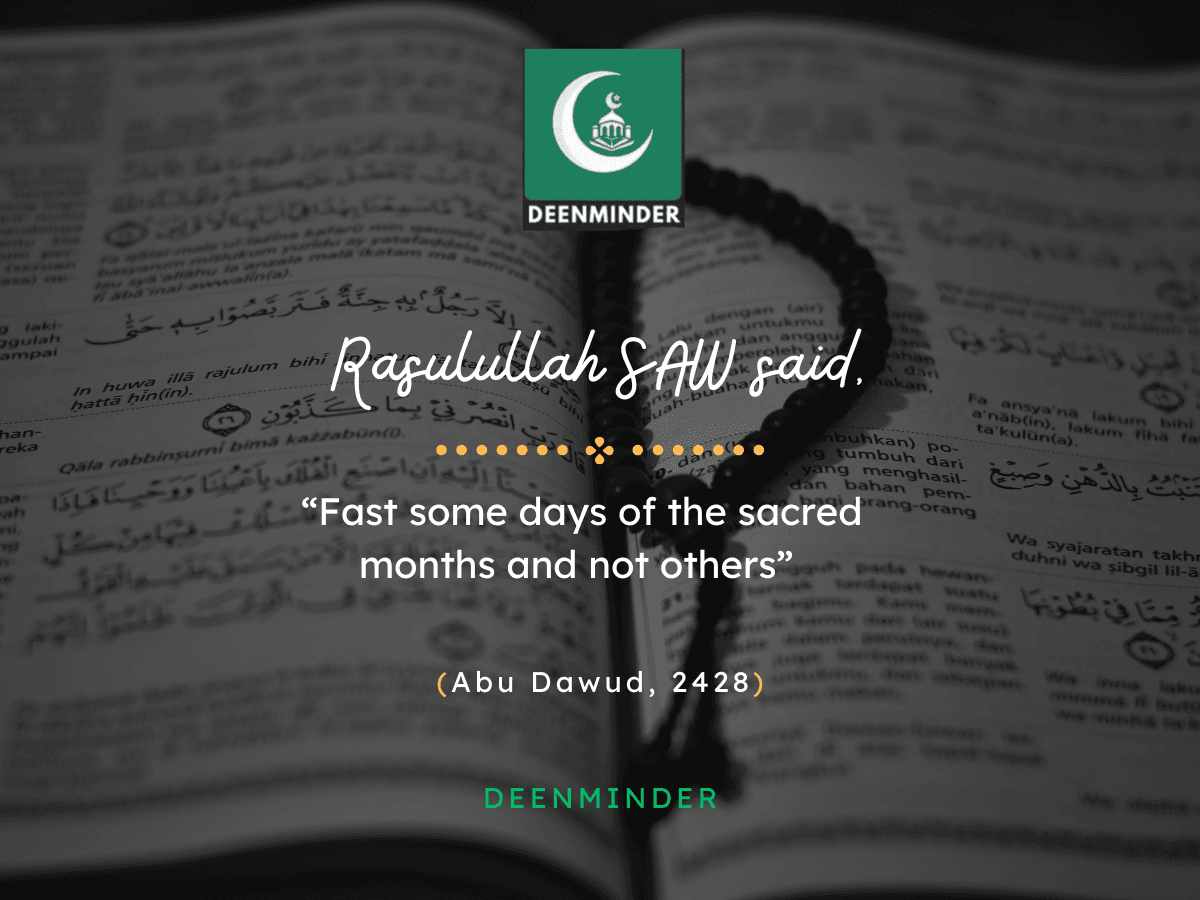
“Fast during the sacred months and then stop; fast during the inviolable months and then stop; fast during the inviolable months and then stop. He indicated by his three fingers, and joined them and then opened them. (Sunan Abi Dawud, 2428) although this narration has been classified as weak by scholars like al-Albani.
Prominent scholars, including Shaykh al-Islam Ibn Taymiyah, have emphasized that hadiths that solely promote fasting in Rajab are often unreliable or fabricated. Nevertheless, fasting during Rajab is permissible as part of broader acts of devotion, provided that it is not overly emphasized or singled out as uniquely meritorious without foundational support.
Fasting in Rajab – 27th of The Month
Among the noteworthy days in Rajab is the 27th, which holds particular significance in popular tradition as it is believed to correspond with the event of Isra and Mi’raj—the miraculous nighttime journey and ascension of Prophet Muhammad (peace be upon him). However, there is a lack of authentic evidence from primary sources to validate fasting on this day or night as a prescribed act of worship.
In this context, Shaykh Ibn ‘Uthaymin has articulated that such practices are innovations (bid’ah) lacking basis in the Qur’an and Sunnah. Despite this, many communities remain devoted to commemorating this historical event through acts of worship. It is vital to recognize that while reflecting on the event and engaging in general acts of devotion are commendable, assigning specific religious merit to fasting on this day is unwarranted.
The Position of Jurists on the Month of Rajab
Islamic scholars exhibit varying perspectives regarding fasting in Rajab:
- Majority Opinion: Hanafi, Maliki, and Shafi’i scholars generally endorse fasting in Rajab as part of the broader observance of righteousness intrinsic to the sacred months. However, these scholars caution against relying on fabricated or weak narrations as a basis for specific practices.
- Hanbali View: Conversely, some Hanbali jurists express disapproval of exclusively fasting in Rajab (the month of Rajab), fearing it may be mistakenly perceived as obligatory, akin to the fasting observed during Ramadan. This apprehension finds its roots in the teachings of ‘Umar ibn al-Khattab, who sought to prevent misconceptions regarding the nature of such practices.
Misconceptions and Innovations
Several weak and fabricated narrations have emerged, promoting particular practices in Rajab, including fasting on the 27th or engaging in special prayers during its nights. Shaykh Ibn ‘Uthaymin firmly stated that these innovations (bid’ah) carry no grounding in the authentic Sunnah. He succinctly posits, “Fasting on the 27th of Rajab and spending that night in prayer is an innovation, and every innovation is a misguidance” (Majmu’ Fatawa Ibn ‘Uthaymin, 20/440). The discernment of authentic practices is crucial to preserving the integrity of Islamic worship.
While voluntary fasting and enhanced worship during the month of Rajab resonate with the ethos of the sacred months, Muslims are urged to refrain from attributing undue virtues to specific days or nights within Rajab. The primary focus should consistently remain on general acts of devotion, encompassing fasting, obligatory and additional prayers, charitable endeavors, and seeking forgiveness and mercy from Allah.

Upholding Authentic Sunnah in Rajab
The People of Sunnah address the common practice known as “awe arugbo” or “the old people’s fasting” in Rajab, pointing out that there is no special fast prescribed for Rajab in Islam. They emphasize that while Muslims can continue with their regular optional fasts such as those on Mondays and Thursdays or during the white days (14th, 15th, and 16th of the lunar month), dedicating a whole month to fasting in the month of Rajab without any basis in the Qur’an or Sunnah is considered an innovation (bid’ah) that can undermine the authentic Sunnah practices.
Moreover, the People of Sunnah highlight the importance of following the authentic teachings of the Prophet and his Companions. They caution against blindly adhering to cultural traditions and innovations without proper knowledge, as this can lead to the distortion of genuine Islamic practices. They stress that proper worship must be grounded in the teachings of Islam, and it is preferable to avoid voluntary acts of worship that are not in line with the Sunnah to maintain the purity of the Islamic faith.
To Conclude
The month of Rajab serves as a profound opportunity for self-reflection, renewal of faith, and intensified devotion among Muslims. Believers are encouraged to honor this sacred time by actively avoiding sin and engaging in righteous endeavors that draw them closer to Allah. However, caution must be exercised to delineate authentic religious practices from innovations that may detract from the essence of worship.
A thorough understanding of the significance of Rajab helps ensure that one’s spiritual observance aligns with the principles of the Qur’an and the authentic teachings of the Prophet Muhammad (peace be upon him). This balanced and informed approach ultimately cultivates a deeper connection to one’s faith during this revered month of rajab, facilitating spiritual growth and a commitment to righteousness that extends far beyond its temporal bounds.
