


Friday is among the best days. For this reason, Allah particularly guided this Nation to it and sanctioned their gathering to be on this day. Friday prayer is like a jewel gleaming amidst fabric— a day that resonates with a unique spiritual aura, beckoning believers to gather in congregation and bow before the Almighty!
The Virtue of Friday Prayer: Understanding Its Sacred Status
But what makes Friday prayer so virtuous? It’s more than fulfilling religious duty; it’s about rejuvenating the soul, strengthening bonds of brotherhood, and seeking divine blessings. When believers gather on Friday, they get together, know each other, bond together, and display mercy and assistance for one another. Friday is like a weekly celebration or festival for Muslims.
The virtue of Friday prayer fosters a profound spiritual connection among believers. It’s a day of reflection, renewal, and reverence—a sacred journey undertaken by millions of souls, bound together by bonds of faith and devotion. As we bow our heads in prayer on this blessed day, let us remember the words of the Prophet:
Abu Huraira reported: Messenger of Allah, peace and blessings be upon him, said, “Best day on which sun has risen is Friday. Adam was created on Friday and on it he entered Paradise and on it he was expelled from therein. Hour will not be established but on Friday.” (Sahih Muslim 854)
Friday Prayer, known as Solatul Jumu’ah, holds a special place in the hearts of Muslims around the world. It’s not just a weekly congregational prayer; it’s a time of spiritual rejuvenation, communal bonding, and reflection on faith.
But what makes this weekly gathering so special? Why do millions of Muslims worldwide prioritize attending Solatul Jumu’ah? Join us as we uncover answers to these questions and more, hunting deep into the heart of why Friday prayer matters in Islam!
Status of Friday Prayer: Its Position in Islamic Worship
Friday prayer stands as a symbol of devotion and unity that weaves together the fabric of Muslim communities worldwide. Unlike daily prayers that can be performed individually in case of returning forgotten or missed, Friday prayer holds a unique status as a congregational obligation as stated in the Quran:
“O you who have believed, when [adhan] is called for prayer on day of Jumu’ah [Friday], then proceed to remembrance of Allah and leave trade. That is better for you, if you only knew” (Surah Al-Jumu’ah, 62:9)
This verse highlights the importance of prioritizing Friday prayer over worldly pursuits, emphasizing centrality in the life of a believer. It serves as a platform for Muslims to come together, reaffirming faith and strengthening bonds of brotherhood. In the words of Prophet Muhammad (peace be upon him), he said:
“Whoever performs the prayer like this [i.e., Friday prayer] will have his sins expiated for him between two Fridays, as long as he doesn’t commit any major sin” (Sahih Muslim)
This hadith highlights great blessings associated with attending Friday prayer, as it serves as a means of purification and redemption for believers. Its position as a congregational obligation emphasizes centrality in the life of a believer.
Upon Whom is Friday Prayer Compulsory
In Islamic jurisprudence, Friday prayer is obligatory for adult Muslim men who are sane, adults, free male Muslims who have no valid excuse not to attend it, and residents of a settled community or town.
For women, while attendance at mosque for Friday prayer is not obligatory, they are encouraged to attend if possible and if they wish. However, if a woman chooses to perform Friday prayer at home, she may do so, as Prophet Muhammad (peace be upon him) granted women the flexibility to worship in their own space.
Friday Prayer is not obligatory on the:
- Travelers,
- Sick person,
- Those with valid excuses, like extreme rain, cold, or widespread diseases, can pray in their houses.
Narrated Tariq ibn Shihab: Prophet صلی اللہ علیہ وسلم said: Friday prayer in congregation is necessary duty for every Muslim, with four exceptions; slave, woman, boy, sick person. (Abu Dawud)
However, it is important to note that those who are exempted from attending Friday prayer should still perform Dhuhr (noon) prayer as an alternative, as it serves as a substitute for Friday prayer.
Timing of Friday Prayer
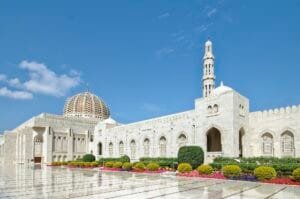
Understanding specific times for performing Friday prayer is paramount for devout Muslims, as it ensures observance following Islamic teachings. Friday prayer is performed in place of the regular Dhuhr (noon) prayer. This means that Friday prayer begins shortly after the sun reaches zenith, typically around midday. This is the opinion of the majority of scholars.
However, it is permissible to perform that prayer just before the sun passes the meridian in case there is a need for that, like in extremely hot weather and there is no shadow to take shelter in, or when people want to set out for Jihad before or around meridian time. Evidence of the two practices is from the following hadiths:
Salamah ibn al-Akwa‘ (may Allah be pleased with him) who was amongst those who had given pledge of allegiance to Prophet beneath Tree, reported: We used to perform Friday prayer with Messenger of Allah (may Allah’s peace and blessings be upon him) and leave at time when walls had no shadow for us to take shelter in.
Another wording reads:”We used to perform Friday prayer with Messenger of Allah (may Allah’s peace and blessings be upon him) after sun had passed meridian, then we would return and try to find shadow. Sahih/Authentic. – [Al-Bukhari and Muslim]
Scholars have agreed that the time of Friday prayer should be at the same time as Dhuhr prayer. It is preferable to perform that prayer after the sun passes meridian ( at Dhuhr prayer time) because this is what the Prophet (may Allah’s peace and blessings be upon him) used to do most of the time. Scholars also unanimously agreed on this.
But what Number of the People Constitutes Friday Prayer?
There is no specified number for Friday Prayer. However, the minimum number of individuals needed to form a valid congregation for Friday prayer is often debated among scholars.
The majority consensus among jurists is that Friday prayer requires a minimum of two or more adult Muslim men to constitute a valid congregation. This ruling is based on the hadith of Prophet Muhammad (peace be upon him), in which he stated,
Narrated Malik bin Huwairith: Two men came to Prophet with intention of journey. Prophet said, When (both of) you set out, pronounce Adhan and then Iqama and oldest of you should lead prayer. (Sahih Bukhari)
However, some scholars argue that the minimum number of individuals required for Friday prayer is seven, twelve, and others. Despite these differences of opinion, Friday prayer is a communal obligation constituted by a number that is conventionally called a large gathering.
Some recommended acts of worship on Friday
- Sending Salutations on Prophet: It is customary to send peace and blessings upon Prophet Muhammad (peace be upon him), invoking Allah’s mercy and favor upon him every night and day of Friday. This practice aligns with the teachings of Islam, which emphasize the importance of honoring and respecting the Prophet as a beloved messenger and exemplar of faith.
As mentioned in Quran: “Indeed, Allah and His angels send blessings upon Prophet. O you who have believed, ask [ Allah to confer] blessing upon him and ask [ Allah to grant him] peace.” (Surah Al-Ahzab, 33:56)
For this, we’ll be rewarded ten times by Allah for every single time we send blessings upon the Prophet as Abu Huraira reported:
Anas reported: Messenger of Allah, peace and blessings be upon him, said, “Increase your supplications for me on day and night of Friday. Whoever blesses me once, Allah will bless him ten times.” (Al-Sunan al-Kubraa)
Aws ibn Aws reported: Messenger of Allah, peace and blessings be upon him, said, “Verily, best of your days is Friday. Adam was created on it, on it he died, on it trumpet will be blown, on it shout will be made. Thus, send blessings upon me often, for your blessings are presented to me.” (Sunan Abii Daawuud 1047)
In addition to sending salutations upon Prophet on Friday, believers are encouraged to incorporate this practice into their daily lives, and invoking blessings upon him regularly will bring them close to him in the Hereafter.
- Recitation of Surah Kahf: Significance of reciting Surah Al-Kahf on Fridays can be traced back to a hadith narrated by Abu Darda (may Allah be pleased with him), in which Prophet Muhammad (peace be upon him) said:
“Whoever reads Surah Al-Kahf on day of Jumu’ah, will have light that will shine from him from one Friday to next.” (Sahih al-Jami)
This hadith highlights spiritual illumination and protection that will be given by Allah to those who engage in the recitation of Surah Al-Kahf on Fridays. The Surah itself contains timeless lessons and parables that resonate with believers of all ages, covering themes such as faith, perseverance, and trials of life.
One of the central narratives within Surah Al-Kahf is the story of the Companions of Cave (Ashab al-Kahf), who sought refuge in a cave to preserve their faith in the face of persecution. Their steadfastness and reliance on Allah serve as a powerful reminder of the importance of faith and resilience in the face of adversity.
In addition, Surah Al-Kahf also contains the parable of two gardeners, the story of Musa (Moses) and Khidr, and the narrative of Dhul-Qarnayn, each offering valuable insights into the nature of faith, morality, and divine wisdom.
- Performing Ghusl, Beautifying Oneself, and Going to Early Salatul Jumu’ah: Muslims are encouraged to perform certain rituals to prepare themselves both physically and spiritually.
One of the recommended practices before Jumu’ah prayer is performing ghusl, or ritual purification. Ghusl involves washing the entire body with water, purifying oneself from impurities and sins. While ghusl is not obligatory for Friday prayer, it is highly recommended as a means of spiritual cleansing and preparation for a sacred gathering.
Whoever performs ablution on Friday has done well, and whoever performs ritual bath has done better. (Sunan Al Tirmidhi 497)
Al-Shafi’i, may Allah have mercy on him, commented on this tradition: command of Prophet to perform ritual bath on Friday indicates preference for it, not obligation.
On this blessed day, believers are encouraged to beautify themselves and adorn their best attire before attending Friday prayer. This practice reflects the reverence and respect one should show towards the act of worship and demonstrates the importance of presenting oneself in a dignified manner before Allah.
Arriving at the mosque early for Friday prayer allows worshippers to secure a place and settle in before the sermon begins. It is recommended to arrive well before adhan (call to prayer) to ensure ample time for preparation and reflection.
The importance of arriving early for Friday prayer is underscored by numerous hadiths narrated by Prophet Muhammad (peace be upon him). In one such hadith, the Prophet emphasized the virtue of arriving early for Jumu’ah, stating:
“On day of Jumu’ah, angels stand at entrance of that mosque in which Jumu’ah prayer is to be offered. They write down name of person who enters mosque first, and thereafter name of person who follows, and they continue doing this.
Person who entered first will receive reward of sacrificing camel in Allah’s cause, who followed him will get reward of sacrificing cow, thereafter chicken, thereafter reward of giving egg as charity in Allah’s cause.” (Sahih Bukhari)
Moreover, it is essential to avoid stepping over others or disrupting the congregation during the khutbah. This practice is discouraged as it may distract worshippers and detract from the sanctity of Friday prayer. Instead, believers should strive to maintain a sense of decorum and reverence, treating the mosque as a sacred space dedicated to the worship of Allah.
Therefore, arriving early for Friday prayer allows believers to prepare themselves both physically and spiritually for congregational worship ahead. It provides an opportunity for quiet reflection, supplication, and mental preparation, enabling worshippers to enter the mosque with a calm and focused mindset.
Listen attentively to Imam: The greatest rites of Friday and its obligatory manners is to listen attentively to Imam in order to contemplate on admonition. It is prohibited by the Prophet (may Allah’s peace and blessings be upon him) to speak with even a few words or forbidding one’s companion from speaking by merely saying: “Be quiet and listen.” This is not allowed.
Abu Huraira reported: Prophet, peace and blessings be upon him, said, “If you tell your companion to be quiet on Friday while Imam is speaking, you have spoken improperly.” (Sahih al-Bukhari 892, Sahih Muslim 851)
Whoever speaks while the Imam is delivering a sermon is guilty of idle talk and can be deprived of the virtue of attending Friday prayer because he has done something that distracts him as well as others from listening to the sermon.
Reward for one who prays Friday prayer well
It has been authenticated in a Hadith, the reward of those that observe their Friday Prayer well is:
Salman al-Farisi reported: The Prophet, peace and blessings be upon him, said, “No one takes a bath on Friday, purifies himself as much as he can, uses oil or perfume in his house, then proceeds for prayer and does not separate two persons sitting together, then prays as much as is written for him and remains silent while the leader is delivering the sermon, except that his sins between this Friday and the previous will be forgiven.” (Sahih Bukhari)
Making Supplications on Friday: Embracing Sacred Hour
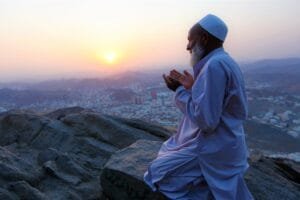
Sunnah of making supplications (Prayer) on Friday during the last hour of the day is rooted in the teachings of Prophet Muhammad (peace be upon him), who encouraged Muslims to seize the opportunity of this blessed time to seek Allah’s favor and blessings.
In hadith narrated by Abu Huraira (may Allah be pleased with him), Prophet (peace be upon him) said: “There is hour on Friday when no Muslim slave stands and prays and asks Allah for something, but Allah will grant him what he has asked for.” (Sahih Bukhari)
This hadith highlights the special significance of the last hour of Friday, during which Allah particularly accepts prayers and supplications of His servants. During this sacred hour, believers are encouraged to turn to Allah with humility and sincerity, pouring out their hearts in supplication and seeking His mercy and forgiveness!
In conclusion, Friday prayer holds great significance in Islam, serving as a sacred opportunity for believers to gather in congregation, worship, and seek the mercy and blessings of Allah. From understanding the virtues and obligations of Friday prayer to embracing its rituals and etiquette, each aspect contributes to the spiritual enrichment and growth of the believer.
By embracing the teachings of Prophet Muhammad (peace be upon him) and adhering to Sunnah, believers can draw closer to Almighty Allah, ensuring that their worship is sincere and accepted!.
